WW1 Revisited
A Great War Journey with Paul Reed
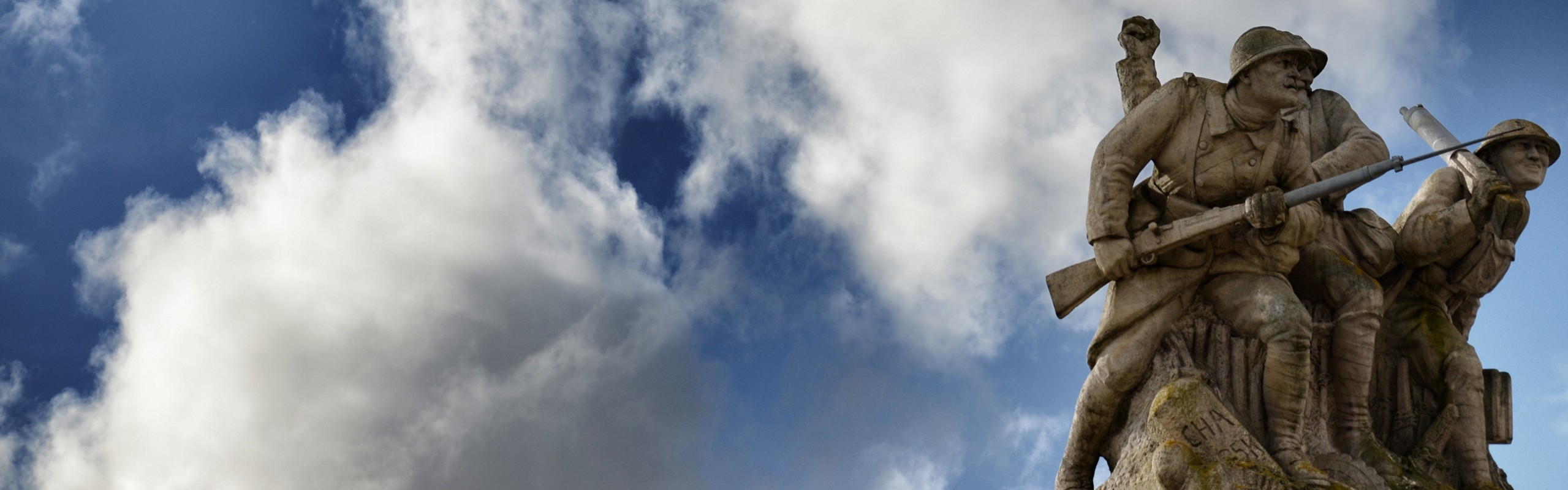
The village of Serre was in German hands from September 1914. Sitting on a rise, the trenches on the slopes surrounding it dominated the Allied positions. On 1st July 1916, the First Day of the Battle of the Somme, men from northern Pals battalions of the 31st Division attacked here achieving very little but suffering heavy losses. One epitaph on these men, from John Harris’ Covenant With Death, reads:
Two years in the making, ten minutes in the destruction… that was our history.
Serre is a special place to me as I interviewed several veterans who were here on 1st July 1916 including two that took part in the assault, and one – a signaller – had to stand close to where I filmed one part of this and watch his battalion, and people he had grown up with, be mowed down in No Man’s Land. It was them I was thinking of as I flew the drone across the battlefield here, starting from a point where the Leeds Pals attached at what is now Serre Road No 3 Cemetery across to where the Accrington Pals were at Queen’s Cemetery. In the final sequence Railway Hollow Cemetery is seen behind the copses and in the distance Luke Copse Cemetery.

Trenches that look anything like what they did a century ago are very rare but this site in the Champagne is quite amazing and has featured on this site before.
This image was taken this week looking out across the fields where the fighting was very heavy in September 1915.
A full article on this site will appear on WW1 Revisited this winter.

On this 98th Anniversary of the end of the Battle of the Somme, this image of the Thiepval Memorial was taken with the Phantom Drone being used for the Above The Battlefield project.
Good friend and author Mary Freeman, author of Poets & Pals of Picardy, coined the phrase ‘Mighty Thiepval’ which sums up what the memorial is about very well indeed – it can be seen all over the Somme battlefields and dominates the Thiepval ridge on which it stands.
When first constructed in 1932 the Thiepval Memorial commemorated more than 73,000 soldiers who fell on the Somme who have no known grave. Since many have been found and reburied in the Somme’s Silent Cities but today the total of 72,193 names still makes it the largest British war memorial in every sense from the number of men it commemorates to the size of the structure.
Prowse Point Military Cemetery was started in late 1914 by men of the British 4th Division who served in this sector from the end of the First Battle of Ypres through the first winter of the war in 1914/15. Units of the division took part in the Christmas Truce here in December 1914. The cemetery has 217 graves.
The film shows a typical battlefield cemetery from the early war years along with the new reconstructed trenches which form part of an international commemoration of the Christmas Truce to take place in December 1914.

Today I was in Flanders visiting the area around Ypres. Close to the village of Ploegsteert, or ‘Plugstreet‘ as the British Tommy called it, I went to Prowse Point Cemetery, in modern Wallonia and near to where the Christmas Truce took place in December 1914. An international event is taking place here this year for the centenary of the Truce and as part of this a set of trenches is being constructed alongside Prowse Point Military Cemetery. Some film of this will be coming soon as part of the Above The Battlefield project.
Above The Battlefield is a new WW1 Revisited project which will feature film of the Great War battlefields taken from an aerial drone, in this case a DJI Phantom 2 Vision+. The traces of the Great War are found all over the Western Front but at times it is hard to see them properly. By filming them from above this will add a new dimension our understanding of the battlefields as they are today.
A test filming trip was made to the Somme last week and this short trailer features some of the film from this trip; this gives a taster of what is possible and more filming will take place this winter, with future videos released via the WW1 Revisited YouTube Channel and this website in due course.
This week marks the centenary of the start of the First Battle of Ypres when the men of the British Expeditionary Force (BEF) defended the ground around Ypres for the first time in what would become almost four years of constant fighting in this area.
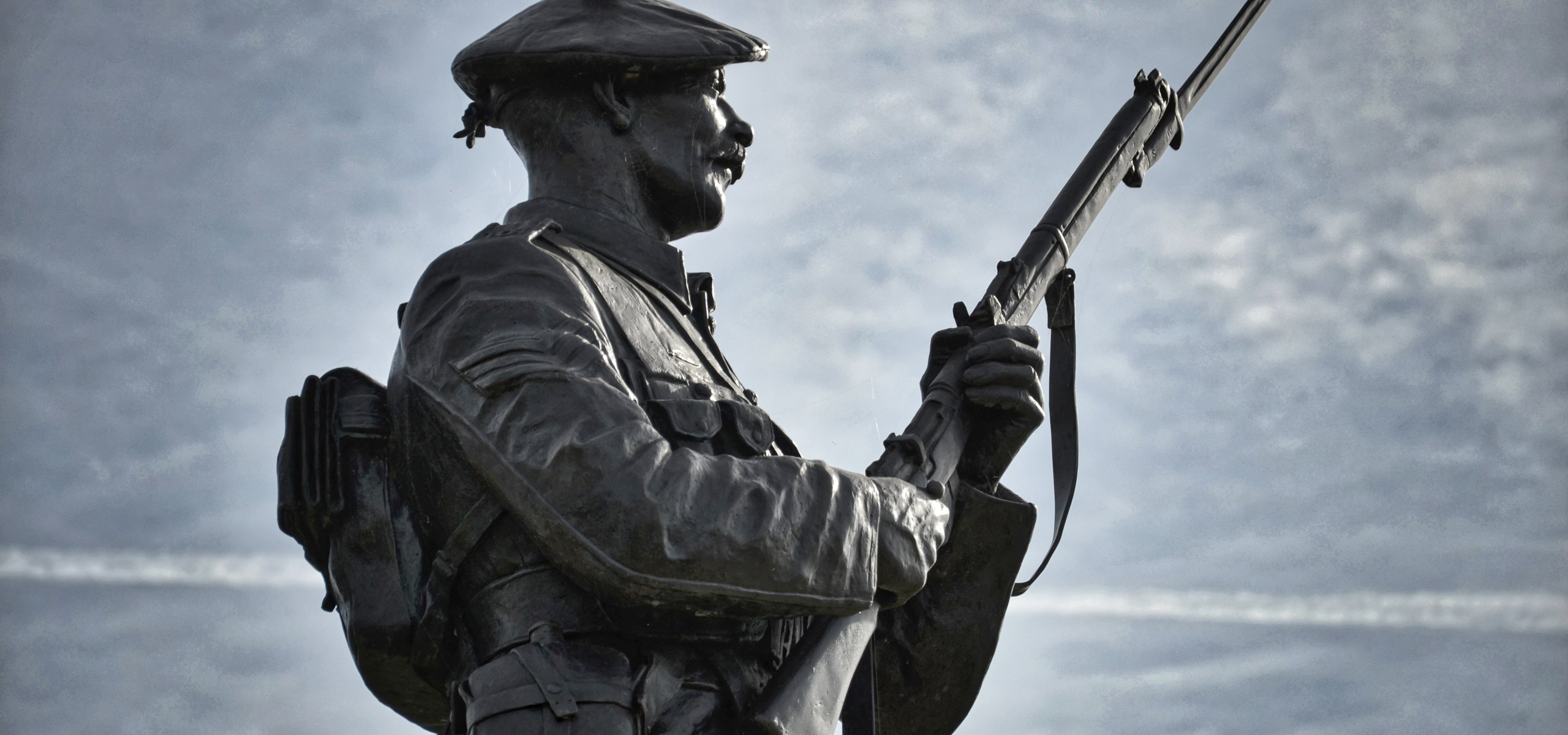
The magnificent Black Watch Memorial at the site of Black Watch Corner near Polygon Wood overlooks the battlefield where a century ago the Old Contemptibles fought their largest battle of the 1914 campaign which will be remembered in Flanders this week.

In a small side road on the edge of fields in Northern France is a small shelter with a British clock face on the roof bearing the name of a company in Derby. On close inspection within lies the grave of Lieutenant Anthony George Attwood Morris. The youngest son of a family from Rugby, Morris had been educated at Winchester and had been commissioned in the regular army before the war, serving in the King’s Own Royal Lancaster Regiment.
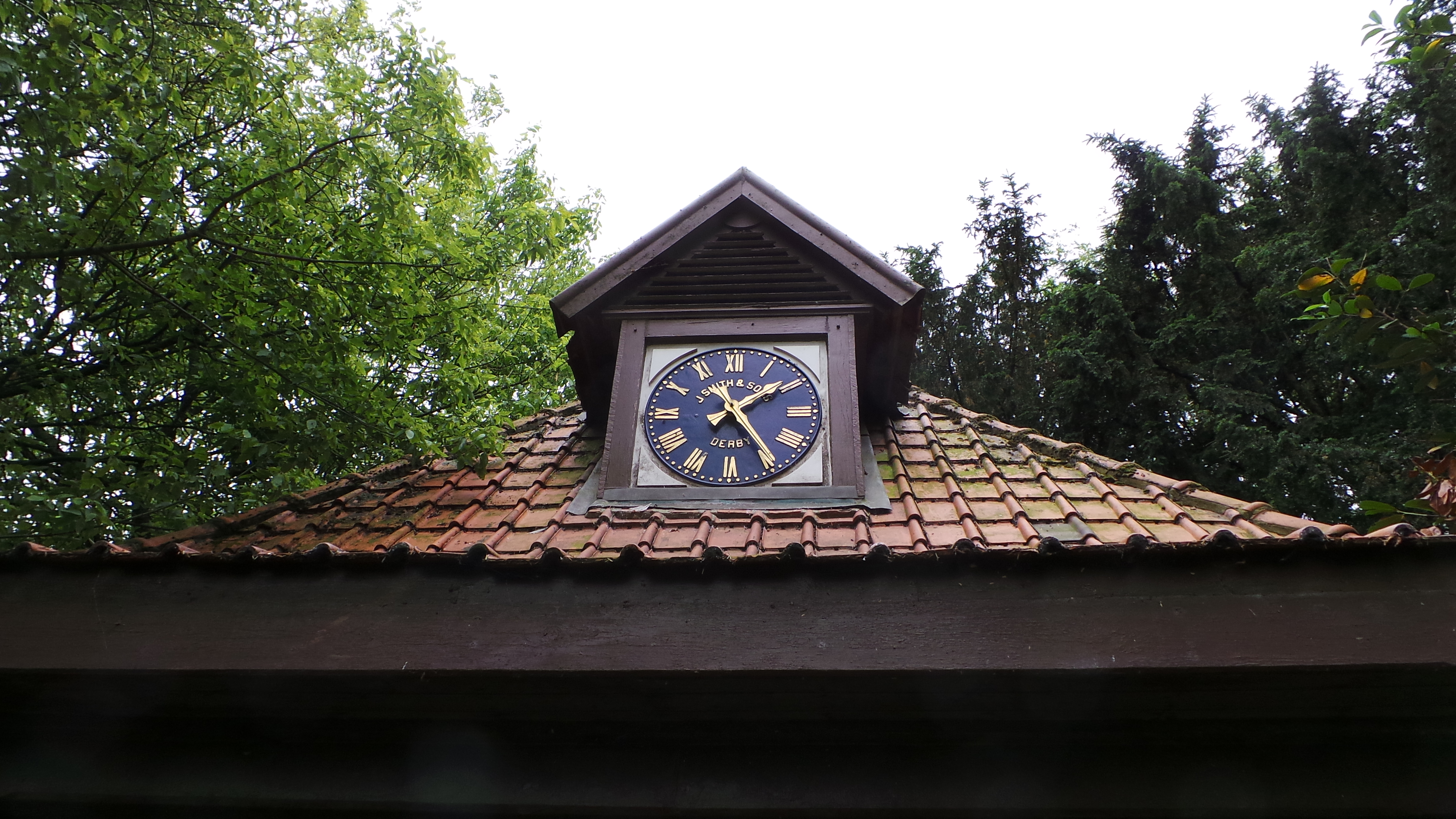
The clock face on the Morris Memorial.
He went to war to join the 1st Battalion King’s Own in September 1914 and served on the Aisne before moving to take part in the fighting in Northern France. He was appointed the officer in charge of the Machine Gun section of 1st King’s Own and was killed with members of his section in the fighting at Méteren. One account said he had set up his gun behind a,
“…scanty hedge where he and his team were later found in a tidy row of eight, all dead and their gun out of action.”
Buried on the spot, his family purchased the land on which he was buried and created the memorial in the 1920s. The family continued to visit into the 1960s and the Western Front Association helped renovate it in the 1990s. A century ago today Morris fell on the fields of France and remains buried where he fell, one of a small number of original grave sites still surviving on the Great War battlefields.
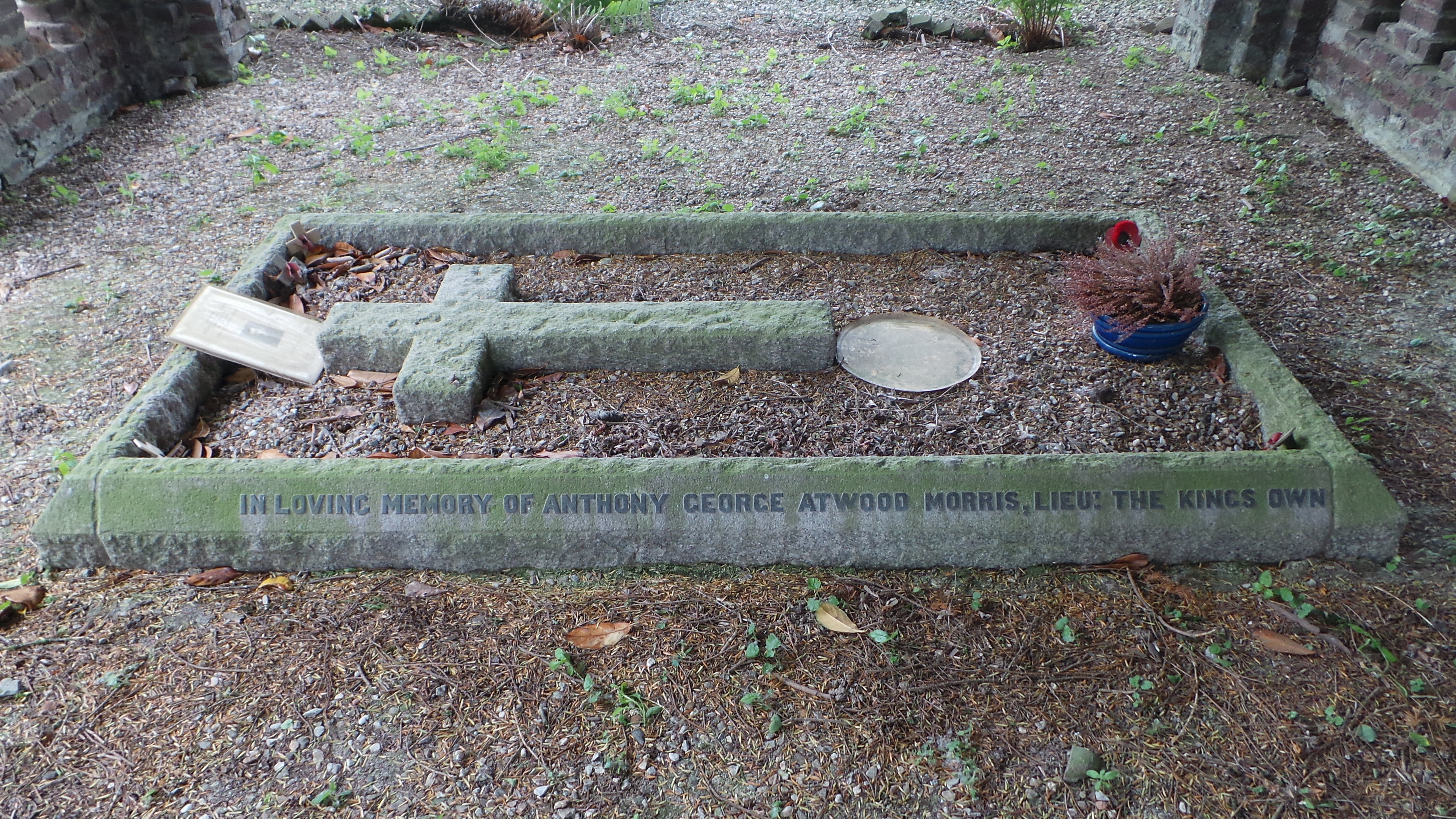
The Morris grave.

On this day a century ago French writer Henri Alban Fournier, better known as Alain Fournier, was killed in the fighting near Tranchee de Calonne, south-east of Verdun. Author of Le Grand Meaulnes Fournier had done his military service before the Great War and was on the reserve when it broke out in August 1914. He was mobilised with the rank of Lieutenant and killed in the fighting on 22nd September 1914 but posted missing. His body was not found until 1991 when it transpired he had been buried on the battlefield with his men by the Germans. His remains were identified in this mass grave along with many others and they were moved to a French National Cemetery at Saint Remy la Calonne.

Alain Fournier’s grave.
The memorial shown at the top of this post is in the woods where the mass grave was found in 1991 and the glass pyramid preserves the battlefield graves were the remains of Fournier and his comrades were discovered.

A century ago the fighting in the fields of the Marne close to Paris was in full swing. Nearly two and a half million British, French and German soldiers, with Colonial troops from the far flung corners of the French Empire, were locked in combat in what would be one of the most decisive battles of 1914 and arguably of the whole war. Historian Dan Snow has just released this excellent video summary of the battle.
There are dozens of small battlefield cemeteries and memorials located across the battlefield but at Mondemont is the huge and imposing Marne Memorial in the form of a massive totem. Part of this memorial features the Allied commanders of the battle which gives a fascinating insight into the French view of the battle: as seen in the above image. ‘Papa’ Joffre looms large with an arm around a French soldier, and to his left are his generals in the battle including a depiction of British commander Sir John French. This dramatic over-sizing of Joffre was imagined but was an obvious affectation used to indicate (rightly) his importance of bringing an Allied victory on the Marne in September 1914.
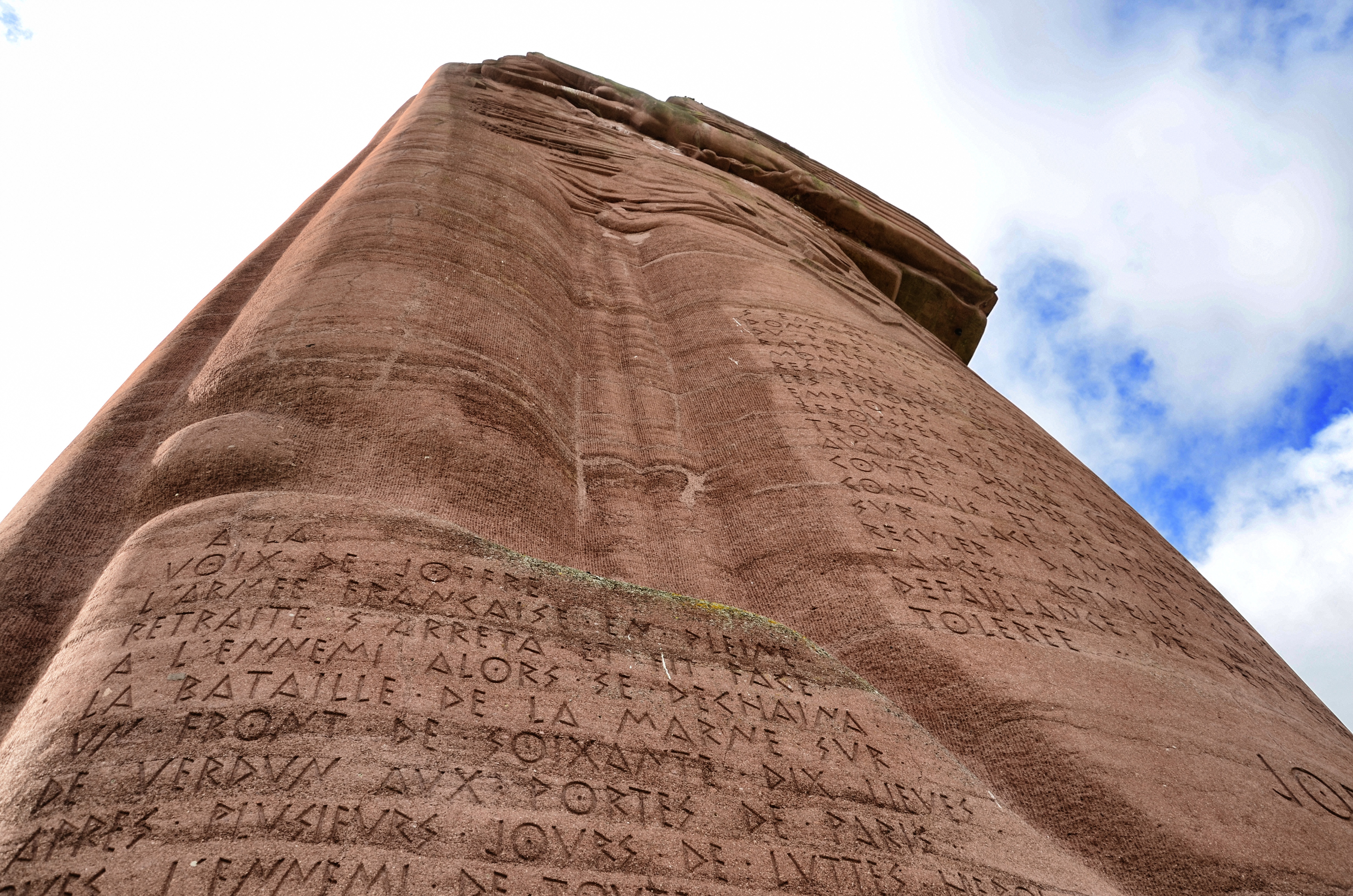
Mondement Memorial
The memorial is one of the most difficult to photograph as these images show.
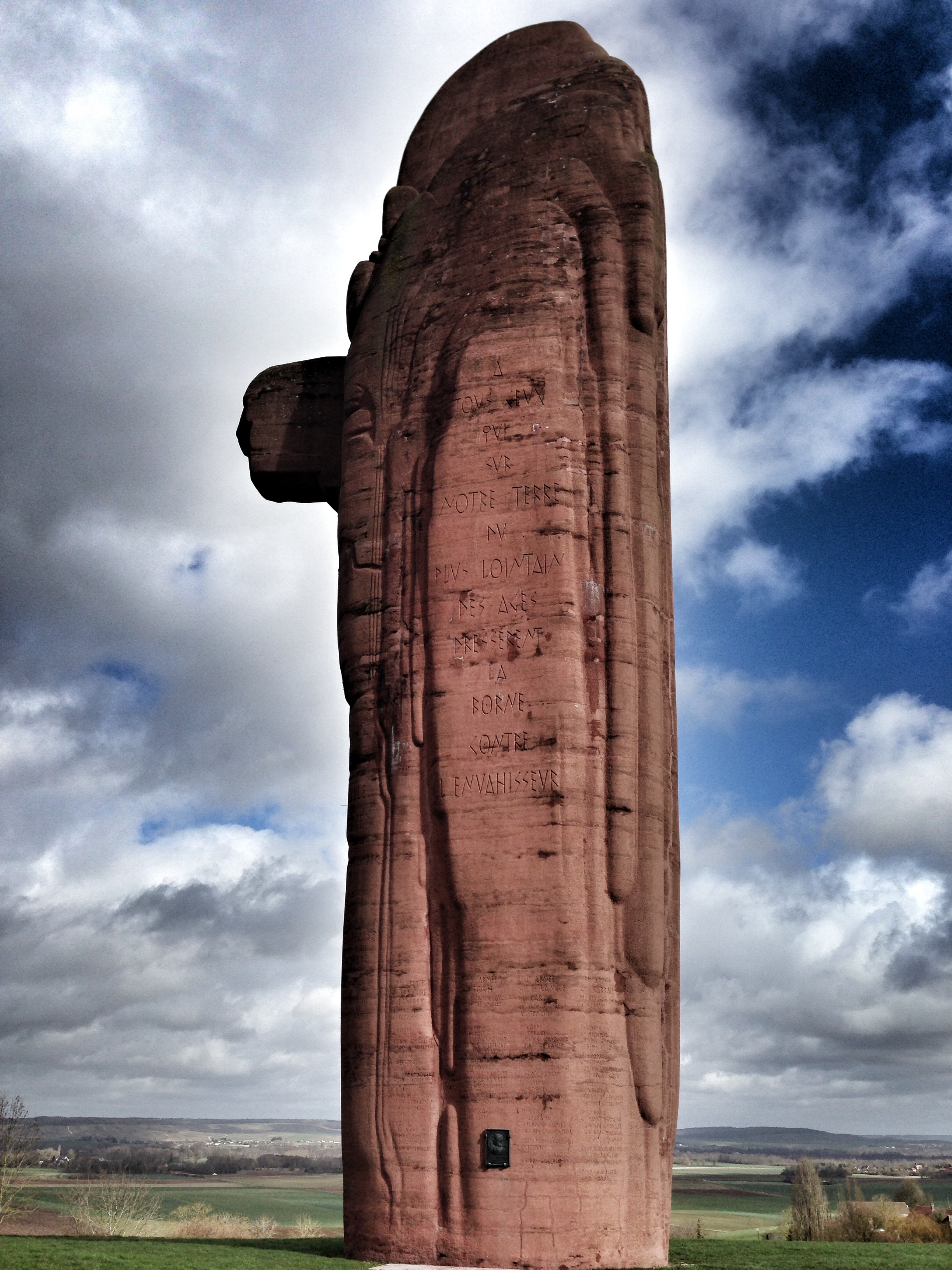
Mondement Memorial

On this day a century ago the Battle of the Marne began, a turning point in the early months of the Great War when the German Army was stopped from reaching Paris. Nearly two and a half million men fought in this battle which lasted less than a week and resulted in heavy losses on both sides; one in four of the French soldiers who took part became casualties, for example.
The Marne battlefield consists of wide open fields, small country villages and rolling downland as seen here in the fields beneath the village of Mondemont – where French and German soldiers clashed in the vital right flank of the Marne battlefield in September 1914.

A century ago today during the early stages of the Battle of the Marne, French author and poet Charles Péguy was killed in action. Péguy was no youngster; he was 41 when he went to war with the 19th Company of the 276th Regiment of Infantry in the French Army with the rank of Lieutenant. Going into action in the fields seen above he was shot in the head and killed instantly, one of more than 300,000 French soldiers who died in 1914. His comments about the writing of history resonate with our own study of the Great War a century later:
“It is impossible to write ancient history because we do not have enough sources, and impossible to write modern history because we have too many”

Charles Péguy (via Newspress)
Péguy and his comrades, as was typical in the battles of 1914, are buried in a mass grave close to the spot where he fell. His name is recorded on a screen wall in the war cemetery near Villeroy.

Villeroy

The village of Hénencourt was behind the British lines in 1916 during the Battle of the Somme and was a rest area for troops going to and from the trenches. The chateau was used by various Corps commanders and was a massive complex dating back to the eighteenth century. The woods surrounding it contained a large army camp and by March 1918 the village was full of men again as the German Spring Offensive loomed close. Over the next few months the village came under heavy shell fire and one wing of the chateau was destroyed.
The chateau is now a private residence, open only rarely to the public. In the 1990s I visited it one weekend and found the walls covered in British graffiti, with names of men from the 58th (London) Division being particularly numerous.

On the road between Henencourt and Baizieux, south of the village of Warloy-Baillon, is the Moulin de Rolmont. Typical of those in the region it is a stone tower that in 1914 was a fully working and functioning windmill. In 1916 the windmill was well behind the lines in what was a rest area for the British Army, and close to a Royal Flying Corps aerodrome. It was photographed by official photographer John Warwick Brooke on 25th August 1916 (see below) which shows it was still intact at that point. This area was very close to the front line by March 1918 and during the next five months many buildings in the area were damaged by shell fire – including this one.
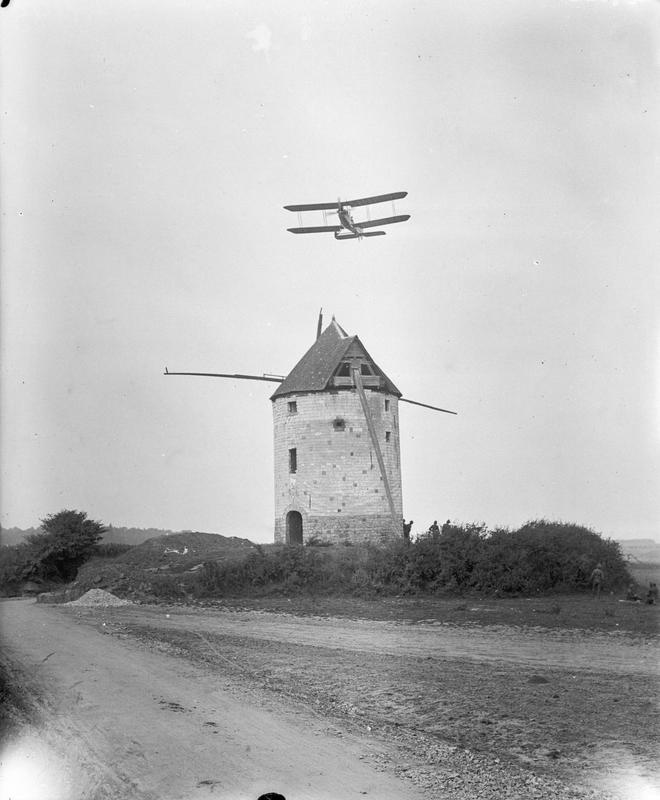
Moulin de Rolmont 1916 (IWM Q5153)
Today it remains as a little known Great War ruin but is in the safe hands of a local association who are working to keep it safe and make it open to visitors on a regular basis.

Bois de Delville, Delville Wood – or Devil’s Wood to the troops – was a large area of woodland attached to a chateau alongside the village of Longueval. This village was taken by the 9th (Scottish) Division on 14th July 1916 and the South African Brigade of that formation marched into the wood 3,500 strong; after six days of fighting as the wood was held, just 750 South Africans walked out. It became the greatest place of sacrifice for South Africa anywhere on the Western Front and after the war was purchased as a memorial site just after the war was over.
The Delville Wood South African Memorial was designed by War Graves Commission architect Sir Hebert Baker and the main memorial archway had a bronze sculpture of two figures with a war horse. The main inscription on the memorial reads:
Their ideal is our legacy.
Their Sacrifice our Inspiration.
 WW1 Revisited
Comments on WW1 Revisited