WW1 Revisited
A Great War Journey with Paul Reed


St. Sever Cemetery Extension is situated about 3 kilometres south of Rouen Cathedral and a short distance west of the road from Rouen to Elbeuf. Coming from Elbeuf/Caen on the N.138 follow Avenue Des Canadiens right down to the roundabout. Take the fourth exit into Boulevard Stanislas Girardin, and the cemetery lies 150 metres on the left. If coming from station Rive Gauche, Gare St Sever, follow Quai D’Elbeuf, Quai Jean Moulin, Quai Cavelier De La Salle into Avenue Jean Rondeaux, Av. De La Liberation, Bd. Du 11 Novembre to the roundabout. Take the first exit into Boulevard Stanislas Girardin, the cemetery lies 150 metres on the left. St Sever is part of Le Petit Quevilly. The first CWGC signpost is just when you get to the entrance of the cemetery.

St Sever Cemetery Extension, Rouen

St Sever Cemetery Extension, Rouen

St Sever Cemetery Extension, Rouen

St Sever Cemetery Extension, Rouen

St Sever Cemetery Extension, Rouen

St Sever Cemetery Extension, Rouen

St Sever Cemetery Extension, Rouen

St Sever Cemetery Extension, Rouen
During the First World War, Commonwealth camps and hospitals were stationed on the southern outskirts of Rouen. A base supply depot and the 3rd Echelon of General Headquarters were also established in the city. Almost all of the hospitals at Rouen remained there for practically the whole of the war. They included eight general, five stationary, one British Red Cross and one labour hospital, and No. 2 Convalescent Depot. A number of the dead from these hospitals were buried in other cemeteries, but the great majority were taken to the city cemetery of St. Sever. In September 1916, it was found necessary to begin an extension, where the last burial took place in April 1920. During the Second World War, Rouen was again a hospital centre and the extension was used once more for the burial of Commonwealth servicemen, many of whom died as prisoners of war during the German occupation. The cemetery extension contains 8,345 Commonwealth burials of the First World War (ten of them unidentified) and 328 from the Second World War (18 of them unidentified).

St Sever Cemetery Extension: Rev Theodore Hardy VC

St Sever Cemetery Extension: Rev Theodore Hardy VC
The extension was designed by Sir Reginald Blomfield.
Number of burials by Unit
| Australian Forces |
782
|
Royal Field Artillery |
440
|
|
| Royal Engineers |
322
|
Royal Garrison Artillery |
298
|
|
| Canadian Forces |
296
|
Royal Fusiliers (City of London Regt.) |
287
|
|
| Indian Forces |
270
|
Machine Gun Corps (Inf.) |
249
|
|
| Army Service Corps |
208
|
Manchester Regt. |
134
|
|
| New Zealand Forces |
132
|
Durham Light Inf. |
125
|
|
| King’s Royal Rifle Corps |
120
|
Sherwood Foresters (Notts. & Derbys. Regt.) |
113
|
|
| West Yorkshire Regt. |
106
|
King’s Liverpool Regt. |
102
|
|
| Royal Warwickshire Regt. |
101
|
Lancashire Fusiliers |
98
|
|
| Gloucestershire Regt. |
94
|
North Staffordshire Regt. |
93
|
|
| Cheshire Regt. |
91
|
British West Indies Regt. |
88
|
|
| Royal Army Medical Corps |
87
|
Rifle Brigade |
85
|
|
| South African Forces |
85
|
Middlesex Regt. |
84
|
|
| Northamptonshire Regt. |
83
|
Worcestershire Regt. |
83
|
|
| Northumberland Fusiliers |
80
|
Royal Naval Division |
79
|
|
| King’s Own Yorkshire Light Inf. |
74
|
Royal Berkshire Regt |
73
|
|
| Duke of Wellingtons (West Rding Regt) |
72
|
Royal Welsh Fusiliers |
69
|
|
| Lincolnshire Regt |
63
|
Essex Regt |
62
|
|
| Yorkshire Regt (Green Howards) |
62
|
Welsh Regt |
58
|
|
| Devonshire Regt |
57
|
Royal Sussex Regt |
57
|
|
| Royal Scots (Lothian Regt) |
56
|
Royal Flying Corps/RAF |
55
|
|
| Gordon Highlanders |
54
|
Loyal North Lancashire Regt |
53
|
|
| South Staffordshire Regt |
53
|
York & Lancaster Regt |
53
|
|
| Argyll & Sutherland Highlanders |
52
|
Queens (Royal West Surrey Regt) |
51
|
|
| Black Watch (Royal Highlanders) |
50
|
Grenadier Guards |
47
|
|
| Ox & Bucks Light Inf |
47
|
Bedfordshire Regt |
46
|
|
| Leicestershire Regt |
45
|
Royal West Kent Regt (Queens Own) |
45
|
|
| Border Regt |
44
|
Chinese Labour Corps |
44
|
|
| Kings Shropshire Light Inf |
44
|
Royal Horse Artillery |
44
|
|
| Cameronians (Sco Rifles) |
43
|
East Lancashire Regt |
43
|
|
| Highland Light Inf |
43
|
South Wales Borderers |
43
|
|
| Suffolk Regt |
42
|
King’s Own Scottish Borderers |
41
|
|
| Cameron Highlanders |
40
|
Royal Army Service Corps |
40
|
|
| Royal Dublin Fusiliers |
40
|
Buffs (East Kent Regt) |
38
|
|
| East Surrey Regt |
38
|
Hampshire Regt |
38
|
|
| Somerset Light Inf |
38
|
Norfolk Regt |
37
|
|
| Dorsetshire Regt |
36
|
19th Bn London Regt (St Pancras) |
35
|
|
| Kings Own Royal Lancaster Regt |
35
|
Seaforth Highlanders |
35
|
|
| South Lancashire Regt |
35
|
8th Bn London Regt (P.O. Rifles) |
33
|
|
| East Yorkshire Regt |
33
|
Duke of Cornwalls Light Inf |
32
|
|
| Royal Irish Rifles |
29
|
Coldstream Guards |
26
|
|
| Royal Inniskilling Fusiliers |
26
|
Wiltshire Regt |
26
|
|
| 7th Bn London Regt |
22
|
Scots Guards |
22
|
|
| Royal Scots Fusiliers |
20
|
Tank Corps |
20
|
|
| 1st Bn London Regt (Royal Fusiliers) |
19
|
Irish Guards |
19
|
|
| Labour Corps |
16
|
Monmouthshire Regt |
16
|
|
| Hertfordshire Regt |
15
|
Royal Irish Regt |
14
|
|
| Royal Munster Fusiliers |
14
|
6th Bn London Regt (City of London Rifles) |
13
|
|
| Army Vetinary Corps |
13
|
12th Bn London Regt (The Rangers) |
12
|
|
| 4th Bn London Regt (Royal Fusiliers) |
12
|
Royal Army Ordnance Corps |
12
|
|
| Cambridgeshire Regt |
11
|
Royal Irish Fusiliers |
11
|
|
| Royal Newfoundland Regt |
11
|
15th Bn London Regt (PWO Civil Service Rifles) |
9
|
|
| 18th Bn London Regt (London irish Rifles) |
9
|
21st Bn London Regt (1st Surrey Rifles) |
9
|
|
| 2nd Bn London Regt (Royal Fusiliers) |
9
|
Army Cyclist Corps |
9
|
|
| Guards Machine Gun Regt |
9
|
Military Police Corps |
9
|
|
| Welsh Guards |
9
|
12th (POW Royal) Lancers |
8
|
|
| 14th Bn London Regt (London Scottish) |
8
|
20th Bn London Regt (Blackheath & Woolwich) |
8
|
|
| 2nd (Queens Bays) Dragoon Guards |
8
|
7th (Princess Royals) Dragoon Guards |
8
|
|
| 9th Bn London Regt (Queen Victorias Rifles) |
8
|
Connaught Rangers |
8
|
|
| Lord Strathcona’s Horse (Canada) |
8
|
13th Bn London Regt (Kensington) |
7
|
|
| 3rd Bn London Regt (Royal Fusiliers) |
7
|
4th (Queens Own) Hussars |
7
|
|
| 5th (Princess Charlotte of Wales’s) Dragoon Guards |
7
|
6th (Caribiniers) Dragoon Guards |
7
|
|
| Honourable Artillery Coy |
7
|
Leinster Regt |
7
|
|
| Queens Own Oxfordshire Hussars |
7
|
10th Bn London Regt (Hackney) |
6
|
|
| 16th Bn London Regt (Queens Westminster Rfiels) |
6
|
22nd Bn London Regt (Queens) |
6
|
|
| 24th Bn London Regt (Queens) |
6
|
19th (Queen Alexandras Own Royal Hussars |
5
|
|
| 20th Hussars |
5
|
2nd (Royal Scots Greys) Dragoons |
5
|
|
| Chaplain to the Forces |
5
|
Fort Garry Horse |
5
|
|
| Machine Gun Corps (Cav) |
5
|
Mercantile Marine |
5
|
|
| 17th Bn London Regt (Poplar & Stepney Rifles) |
4
|
5th Bn London Regt (London Rifle Brigade) |
4
|
|
| 8th (Kings Royal Irish) Hussars |
4
|
9th (Queens Royal ) Lancers |
4
|
|
| British Red Cross Society |
4
|
Herefordshire Regt |
4
|
|
| Queen Mary Army Auxilliary Corps |
4
|
11th (Prince Alberts Own ) Hussars |
3
|
|
| 15th (The Kings) Hussars |
3
|
16th (The Queens) Lancers |
3
|
|
| 18th (Queen Mary’s Own) Hussars |
3
|
2/4th Bn London Regt (Royal Fusiliers) |
3
|
|
| 6th (Inniskilling) Dragoons |
3
|
Kings Edwards Horse |
3
|
|
| North Irish Horse |
3
|
Royal Guernsey Light Inf |
3
|
|
| 17th (Duke of Cambridge’s Own) Lancers |
2
|
1st Life Guards |
2
|
|
| 2/12th Bn London Regt (The Rangers) |
2
|
2/8th Bn London Regt (P.O. Rifles) |
2
|
|
| 28th Bn London Regt (Artists Rifles) |
2
|
2nd Life Guards |
2
|
|
| 4th (Royal Irish) Dragoon Guards |
2
|
Lothian & Border Horse |
2
|
|
| Royal Horse Guards |
2
|
Royal Naval Volunteer Reserve |
2
|
|
| Voluntary Aid Detachement |
2
|
10th (POW Own Royal) Hussars |
1
|
|
| 11th Bn London Regt (Finsbury Rifles) |
1
|
2/14th Bn London Regt (London Scottish) |
1
|
|
| 2/1st Bn London Regt (Royal Fusiliers) |
1
|
2/5th Bn London Regt (London Rifle Brigade) |
1
|
|
| 2/6th Bn London Regt (City of London Rifles) |
1
|
21st (Empress of India’s) Lancers |
1
|
|
| 23rd Bn London Regt |
1
|
25th Bn London Regt (Cyclist Btn) |
1
|
|
| 29th Bn London Regt |
1
|
30th Bn London Regt |
1
|
|
| 3rd (King’s Own) Hussars |
1
|
5th (Royal Irish) Lancers |
1
|
|
| Bedfordshire Yeomanry |
1
|
Civilian |
1
|
|
| Egyptian Labour Corps |
1
|
General List |
1
|
|
| Household Btn |
1
|
Leicestershire Yeomanry |
1
|
|
| North Somerset Yeomanry |
1
|
Northumberland Hussars |
1
|
|
| Queen Alexandrias Imperial Military Nursing Service |
1
|
Reserve Cavalry Regt |
1
|
|
| Yorkshire Hussars |
1
|
|||
| Identified UK & Commonwealth Burials |
8332
|
|||
| Italian Labour Corps |
4
|
|||
| Police Air Force |
2
|
|||
| French Army |
1
|
|||
| Czechoslovakian Army |
1
|
|||
| WW2 |
310
|
|||
| Total known |
8650
|
|||
| Unidentified Burials |
28
|
|||
| Total Burials |
8678
|

St. Sever Cemetery, Rouen, is situated about 3 kilometres south of Rouen Cathedral and a short distance west of the road from Rouen to Elbeuf. Coming from Elbeuf/Caen on the N.138 follow Avenue Des Canadiens right down to the roundabout. Take the fourth exit into Boulevard Stanislas Girardin, and the cemetery lies 150 metres on the left. If coming from station Rive Gauche, Gare St Sever, follow Quai D’Elbeuf, Quai Jean Moulin, Quai Cavelier De La Salle into Avenue Jan Rondeaux, Av. De La Liberation, Bd. Du 11 Novembre to the roundabout. Take the first exit into Boulevard Stanislas Girardin, and the cemetery lies 150 metres on the left. St. Sever is part of Le Petit Quevilly. The first CWGC signpost is just when you get to the entrance of the cemetery.

St Sever Cemetery, Rouen

St Sever Cemetery, Rouen

St Sever Cemetery, Rouen

St Sever Cemetery, Rouen
During the First World War, Commonwealth camps and hospitals were stationed on the southern outskirts of Rouen. A base supply depot and the 3rd Echelon of General Headquarters were also established in the city. Almost all of the hospitals at Rouen remained there for practically the whole of the war. They included eight general, five stationary, one British Red Cross, one labour hospital, and No. 2 Convalescent Depot. A number of the dead from these hospitals were buried in other cemeteries, but the great majority were taken to the city cemetery of St. Sever. In September 1916, it was found necessary to begin an extension. St. Sever Cemetery contains 3,083 Commonwealth burials of the First World War.

St Sever: Brig-Gen F.J. De Gex

St Sever: Brig-Gen F.J. De Gex

St Sever: Dame Lucy Branfoot

St Sever: Edith Pearton YMCA

St Sever: Louisa Riggall

St Sever: F.B. Leighton
The Commonwealth plots were designed by Sir Reginald Blomfield.
Number of burials by Unit
| Canadian Forces | 131 | Royal Field Artillery | 128 | |
| Australian Forces | 112 | Northumberland Fusiliers | 79 | |
| Indian Forces | 76 | Royal Fusiliers (City of London Regt.) | 76 | |
| King’s Royal Rifle Corps | 70 | Manchester Regt. | 67 | |
| Army Service Corps | 65 | King’s Liverpool Regt. | 65 | |
| Royal Engineers | 61 | Middlesex Regt. | 58 | |
| King’s Own Yorkshire Light Inf. | 55 | Durham Light Inf. | 53 | |
| New Zealand Forces | 51 | Gordon Highlanders | 48 | |
| West Yorkshire Regt. | 47 | Black Watch (Royal Highlanders) | 46 | |
| Rifle Brigade | 46 | Leicestershire Regt. | 45 | |
| Royal Warwickshire Regt. | 42 | Welsh Regiment | 40 | |
| Gloucestershire Regt. | 38 | Argyll & Sutherland Highlanders | 37 | |
| Cheshire Regt. | 37 | Royal Scots (Lothian Regt.) | 37 | |
| Bedfordshire Regt. | 34 | Border Regt. | 33 | |
| Highland Light Inf. | 33 | Seaforth Highlanders | 32 | |
| Northamptonshire Regt. | 31 | Devonshire Regt. | 30 | |
| East Surrey Regt. | 30 | East Yorkshire Regt. | 30 | |
| Royal Garrison Artillery | 30 | Suffolk Regt. | 30 | |
| King’s Own Scottish Borderers | 29 | Royal Berkshire Regt. | 29 | |
| Royal Welsh Fusiliers | 29 | Lincolnshire Regt. | 27 | |
| Royal Army Medical Corps | 27 | Machine Gun Corps (Inf.) | 26 | |
| Royal West Kent (Queen’s Own) | 26 | South Lancashire Regt. | 26 | |
| Cameron Highlanders | 25 | Grenadier Guards | 25 | |
| Lancashire Fusiliers | 25 | Worcestershire Regt. | 25 | |
| Yorkshire Regt. (The Green Howards) | 25 | Buffs (East Kent Regt.) | 24 | |
| Cameronians (Scottish Rifles) | 24 | Loyal North Lancashire Regt. | 24 | |
| Norfolk Regt. | 24 | Duke of Wellington’s (West Riding Regt.) | 23 | |
| Essex Regt. | 23 | Ox. & Bucks. Light Inf. | 23 | |
| Sherwood Foresters (Notts. & Derbys. Regt.) | 23 | Queen’s (Royal West Surrey Regt.) | 22 | |
| Royal Irish Rifles | 22 | Somerset Light Inf. | 21 | |
| South Staffordshire Regt. | 21 | Coldstream Guards | 19 | |
| King’s Own Royal Lancaster Regt. | 19 | South African Forces | 19 | |
| King’s Shropshire Light Inf. | 18 | Duke of Cornwall’s Light Inf. | 17 | |
| Royal Irish Fusiliers | 17 | Royal Sussex Regt. | 17 | |
| Royal Dublin Fusiliers | 16 | York & Lancaster Regt. | 15 | |
| Royal Inniskilling Fusiliers | 14 | Royal Scots Fusiliers | 14 | |
| East Lancashire Regt. | 13 | South Wales Borderers | 13 | |
| 19th Bn. London Regt. (St. Pancras) | 12 | Hampshire Regt. | 12 | |
| Royal Munster Fusiliers | 11 | Irish Guards | 11 | |
| Leinster Regt. | 11 | Royal Flying Corps/Royal Air Force | 10 | |
| Royal Irish Regiment | 10 | 14th Bn. London Regt. (London Scottish) | 9 | |
| 17th Bn. London Regt. (Poplar & Stepney Rifles) | 9 | 23rd Bn. London Regt. | 9 | |
| Connaught Rangers | 9 | Royal Horse Artillery | 8 | |
| Scots Guards | 8 | 12th Bn. London Regt. (The Rangers) | 7 | |
| 9th Bn. London Regt. (Queen Victoria’s Rifles) | 7 | Dorsetshire Regt. | 7 | |
| North Staffordshire Regt. | 7 | Wiltshire Regt. | 7 | |
| 15th Bn. London Regt. (PWO Civil Service Rifles) | 6 | 16th Bn. London Regt. (Queen’s Westminster Rifles) | 6 | |
| 21st Bn. London Regt. (First Surrey Rifles) | 6 | 6th Bn. London Regt. (City of London Rifles) | 6 | |
| 7th Bn. London Regt. | 6 | 8th Bn. London Regt. (Post Office Rifles) | 6 | |
| 20th Bn. London Regt. (Blackheath & Woolwich) | 5 | 24th Bn. London Regt. (The Queen’s) | 5 | |
| 2nd Bn. London Regt. (Royal Fusiliers) | 5 | 5th Bn. London Regt. (London Rifle Brigade) | 5 | |
| Army Veterinary Corps | 5 | Monmouthshire Regt. | 5 | |
| Royal Army Ordnance Corps | 5 | Royal Newfoundland Regt. | 5 | |
| 28th Bn. London Regt. (Artists’ Rifles) | 4 | Hertfordshire Regt. | 4 | |
| 13th Bn. London Regt. (Kensington) | 3 | 18th Bn. London Regt. (London Irish Rifles) | 3 | |
| 2/10th Bn. London Regt. (Hackney) | 3 | 4th Bn. London Regt. (Royal Fusiliers) | 3 | |
| Labour Corps | 3 | Royal Naval Division | 3 | |
| Welsh Guards | 3 | 15th (The King’s) Hussars | 2 | |
| 1st Bn. London Regt. (Royal Fusiliers) | 2 | 1st Life Guards | 2 | |
| 2nd (Queen’s Bays) Dragoon Guards | 2 | 3rd (Prince of Wales’) Dragoon Guards | 2 | |
| 6th (Carabiniers) Dragoon Guards | 2 | Cambridgeshire Regt. | 2 | |
| Chaplain to the Forces | 2 | North Somerset Yeom. | 2 | |
| Royal Marine Light Inf. (Royal Naval Division) | 2 | Royal Wiltshire Yeom. | 2 | |
| Voluntary Aid Detachment | 2 | 10th (POW Royal) Hussars | 1 | |
| 11th (Prince Albert’s Own) Hussars | 1 | 16th (The Queen’s) Lancers | 1 | |
| 17th (Duke of Cambridge’s Own) Lancers | 1 | 19th (Queen Alexandra’s Own Royal) Hussars | 1 | |
| 1st (Royal) Dragoons | 1 | 2/21st Bn. London Regt. (First Surrey Rifles) | 1 | |
| 2/4th Bn. London Regt. (Royal Fusiliers) | 1 | 22nd Bn. London Regt. (The Queen’s) | 1 | |
| 2nd Life Guards | 1 | 3rd (King’s Own) Hussars | 1 | |
| 3rd Bn. London Regt. (Royal Fusiliers) | 1 | 4th (Queen’s Own) Hussars | 1 | |
| 4th (Royal Irish) Dragoon Guards | 1 | 5th (Royal Irish) Lancers | 1 | |
| 8th (King’s Royal Irish) Hussars | 1 | Army Cyclist Corps | 1 | |
| Army Pay Dept. | 1 | British Red Cross Society | 1 | |
| Church Army | 1 | Civilian | 1 | |
| French Army | 1 | Herefordshire Regt. | 1 | |
| Household Bn. | 1 | Lord Strathcona’s Horse (Canada) | 1 | |
| Machine Gun Corps (Cavalry) | 1 | Mercantile Marine | 1 | |
| Military Police Corps | 1 | Queen’s Own Oxfordshire Hussars | 1 | |
| Royal Army Service Corps | 1 | Royal Horse Guards | 1 | |
| South Irish Horse | 1 | Special List | 1 | |
| Sussex Yeom. | 1 | Tank Corps | 1 | |
| West Kent Yeom. (Queen’s Own) | 1 | YMCA | 1 | |
| Identified Burials | 3083 | |||
| Unidentified Burials | 2 | |||
| Total Burials | 3085 |

Vendresse is a village in the Department of the Aisne 16 kilometres south of Laon. Vendresse British Cemetery is 800 metres north of the village on the west side of the road to Laon.

Vendresse British Cemetery, Aisne

Vendresse British Cemetery, Aisne

Vendresse British Cemetery, Aisne

Vendresse British Cemetery, Aisne
The neighbourhood of Vendresse-Et-Troyon was the scene of repeated and severe fighting in which British troops took part in 1914 and 1918. Vendresse British Cemetery was made after the Armistice by the concentration of graves from other cemeteries and from the battlefields. There are now over 700, 1914-18 war casualties commemorated in this site. Of these, over half are unidentified and almost all of whom fell in 1914 or 1918. Special memorials are erected to three soldiers, known or believed to be buried here in unnamed graves; and other special memorials record the names of 50 United Kingdom soldiers buried in other cemeteries whose graves were destroyed by shell fire. In 37 instances, graves identified collectively but not individually are marked by headstones superscribed: “Buried near this spot”.

Vendresse: Capt L. Slater


Vendresse: Lt H.L. Pelham

Vendresse: Brig-Gen R.H. Husey

Vendresse: Brig-Gen R.H. Husey
The British Cemetery covers an area of 2,188 square metres and is enclosed (except on the roadside) by a low stone rubble wall. The following were among the burial grounds from which British graves were moved to Vendresse British Cemetery:
BEAURIEUX FRENCH MILITARY CEMETERY, where 16 British soldiers were buried by the Germans in May-July 1918.
BOURG-ET-COMIN FRENCH MILITARY CEMETERIES “A” and “B (Madagascar)”, where two British soldiers were buried, one in 1914 and one in 1918.
CALIFORNE FRENCH MILITARY CEMETERY, CRAONNE, where one British soldier was buried by the enemy in May 1918.
CERNY-EN-LAONNOIS FRENCH NATIONAL and GERMAN CEMETERIES, both great permanent burial grounds; 59 British soldiers were buried in the German in 1914, and nine in the French in 1914 and 1918.
CHAMOUILLE GERMAN CEMETERY, where 16 British soldiers were buried in 1914.
CHIVY-LES-ETOUVELLES GERMAN CEMETERIES, four in number, containing graves of 13 British soldiers who fell in 1914.
MORIEULOIS GERMAN CEMETERY, CREPY-EN-LAONNOIS, where seven British soldiers were buried in July and August 1918.
MOUSSY-SUR-AISNE CHURCHYARD, where 14 British soldiers were buried in September 1914.
OEUILLY CHURCHYARD, AISNE, which contained four British graves of 1914.
TROYON CHURCHYARD, AISNE, which contained 50 British graves of 1914.
VERNEUIL CHATEAU MILITARY CEMETERY, where 46 British soldiers were buried in 1914 from the Dressing Station in the Chateau. In October 1915, the French 57th Infantry Regiment erected a stone memorial (now removed to Vendresse) to their British comrades.
VERNEUIL CHURCHYARD, MARNE, where one British soldier was buried in October 1914.

Vendresse Churchyard is located in the centre of this small village and to the north of the main road running through the village. The CWGC Plot, which is surrounded by a small hedge, can be found to the rear of the church within the confines of the churchyard. Vendresse village can be reached from the direction of Laon by following the D967, Laon to Fismes road. From this direction the road is scenic. Shortly after passing Vendresse British Cemetery on the right side of the road, it is possible to see the church of Vendresse, also on the right side. Look for a right turn, D68, signposted Vendresse and Soupir. In the centre of the village turn right heading for the church and churchyard. Alternatively, when approaching from Soissons via Vailly-sur-Aisne on the D925, take the third exit at the roundabout at Bourg et Comin in the direction of Laon, D967. After a short distance turn left for Vendresse village (D68) where the above directions will apply.

Vendresse Churchyard, Aisne

Vendresse Churchyard, Aisne

Vendresse Churchyard, Aisne

Vendresse Churchyard, Aisne
The neighbourhood was the scene of severe fighting in which British troops took part in 1914 and 1918. There are now over 80, 1914-18 war casualties commemorated in this site. Of these, half are unidentified and special memorials are erected to 35 soldiers known to be buried here among them.

Vendresse: Capt R.N. Grenfell

Vendresse: Capt R.N. Grenfell
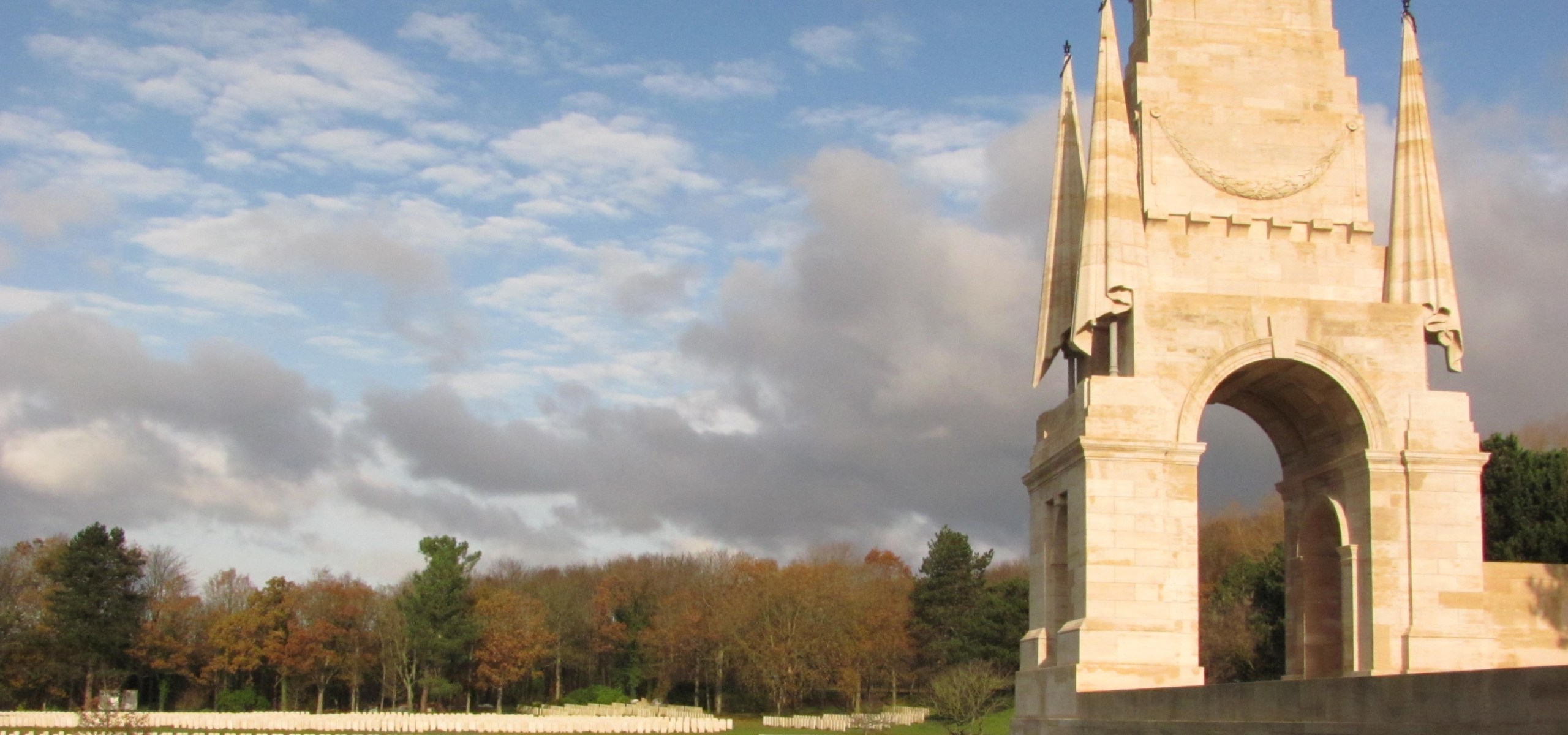
Etaples is a town about 27 kilometres south of Boulogne. Etaples Military Cemetery is to the north of the town, on the west side of the road to Boulogne.

Etaples Military Cemetery

Etaples Military Cemetery

Etaples Military Cemetery

Etaples Military Cemetery

Etaples Military Cemetery

Etaples Military Cemetery

Etaples Military Cemetery
During the First World War, the area around Etaples was the scene of immense concentrations of Commonwealth reinforcement camps and hospitals. It was remote from attack, except from aircraft, and accessible by railway from both the northern or the southern battlefields. In 1917, 100,000 troops were camped among the sand dunes and the hospitals, which included eleven general, one stationary, four Red Cross hospitals and a convalescent depot, could deal with 22,000 wounded or sick. In September 1919, ten months after the Armistice, three hospitals and the Q.M.A.A.C. convalescent depot remained.

Etaples: Jasper Myers Richardson

Etaples: Jasper Myers Richardson

Etaples: Lt-Col W.R.A. Dawson DSO

Etaples: Lt-Col W.R.A. Dawson DSO

Etaples: Lt-Col A.M. Holdsworth

Etaples: Lt-Col A.M. Holdsworth

Etaples Military Cemetery

Etaples Military Cemetery

Etaples Military Cemetery

Etaples Military Cemetery

Etaples Military Cemetery

Etaples Military Cemetery
The cemetery contains 10,769 Commonwealth burials of the First World War, the earliest dating from May 1915. Hospitals were again stationed at Etaples during the Second World War and the cemetery was used for burials from January 1940 until the evacuation at the end of May 1940. After the war, a number of graves were brought into the cemetery from other French burial grounds. Of the 119 Second World War burials, 38 are unidentified. Etaples Military Cemetery also contains 658 German burials and a few war graves of other nationalities. The cemetery, the largest Commission cemetery in France, was designed by Sir Edwin Lutyens.

Etaples Military Cemetery in the snow 1919
| Royal Field Artillery |
584
|
Royal Engineers |
302
|
|
| Royal Garrison Artillery |
271
|
Northumberland Fusiliers |
258
|
|
| Machine Gun Corps |
244
|
Royal Fusiliers (City Of London Regt) |
243
|
|
| Kings Liverpool Regt |
203
|
Gordon Highlanders |
199
|
|
| West Yorkshire Regt |
188
|
Royal Scots (Lothian Regt) |
178
|
|
| Seaforth Highlanders |
163
|
Middlesex Regt |
156
|
|
| Durham Light Inf |
153
|
Royal Army Medical Corps |
142
|
|
| Kings Royal Rifle Corps |
135
|
Manchester Regt |
135
|
|
| Rifle Brigade |
128
|
Duke of Wellingtons (West Riding Regt) |
127
|
|
| South Staffordshire Regt |
125
|
Lincolnshire Regt |
125
|
|
| Army Service Corps |
124
|
Lancashire Fusiliers |
117
|
|
| Kings Own Yorkshire Light Infantry |
116
|
Sherwood Foresters (Notts & Derbys Regt) |
112
|
|
| York and Lancaster Regt |
107
|
Royal Welsh Fusiliers |
103
|
|
| Highland Light Infantry |
101
|
Queens (Royal West Surrey Regt) |
97
|
|
| Argyll & Sutherland Highlanders |
96
|
Black Watch (Royal Highlanders) |
94
|
|
| Border Regt |
93
|
East Yorkshire Regt |
92
|
|
| Yorkshire Regt (Green Howards) |
91
|
Essex Regt |
90
|
|
| Royal Warwickshire Regt |
87
|
Worcestershire Regt |
85
|
|
| Hampshire Regt |
83
|
Cheshire Regt |
81
|
|
| Suffolk Regt |
81
|
Loyal North Lancashire Regt |
79
|
|
| Royal Lancaster Regt |
78
|
Royal Berkshire Regt |
71
|
|
| Kings Shropshire Light Inf |
71
|
Grenadier Guards |
70
|
|
| Ox and Bucks Light Infantry |
69
|
Cameronians (Scottish Rifles) |
68
|
|
| South Lancashire Regt |
66
|
Bedfordshire Regt |
64
|
|
| Gloucestershire Regt |
62
|
Royal Sussex Regt |
62
|
|
| Cameron Highlanders |
61
|
Royal Army Service Corps |
61
|
|
| Kings Own Scottish Borderers |
60
|
Royal West Kent Regt (Queens Own) |
60
|
|
| Devonshire Regt |
59
|
East Lancashire Regt |
59
|
|
| Leicestershire Regt |
55
|
Somerset Light Infantry |
53
|
|
| Royal Scots Fusiliers |
52
|
19th Bn London Regt (St. Pancras) |
51
|
|
| 1st Life Guards |
51
|
East Surrey Regt |
49
|
|
| Buffs (East Kent Regt) |
48
|
South Wales Borderers |
48
|
|
| Norfolk Regt |
48
|
North Staffordshire Regt |
46
|
|
| Welsh Regiment |
41
|
Royal Dublin Fusiliers |
39
|
|
| Duke of Cornwall’s Light Inf |
38
|
Coldstream Guards |
38
|
|
| Irish Guards |
36
|
Royal Naval Division, Royal Marines Light Inf |
36
|
|
| Honourable Artillery Coy |
35
|
Wiltshire Regt |
35
|
|
| Royal Air Force |
34
|
Dorsetshire Regt |
33
|
|
| Scots Guards |
33
|
Northamptonshire Regt |
33
|
|
| Royal Irish Rifles |
30
|
14th Bn London Regt (London Scottish) |
27
|
|
| Tank Corps |
27
|
9th Bn London Regt (Queen Victorias Rifles) |
23
|
|
| Royal Inniskilling Fusiliers |
21
|
1st Bn London Regt (Royal Fusiliers) |
20
|
|
| Royal Flying Corps |
19
|
12th Bn London Regt (The Rangers) |
17
|
|
| Leinster Regt |
17
|
Royal Irish Fusiliers |
17
|
|
| 5th Bn London Regt (London Rifle Brigade) |
16
|
22nd Bn London Regt (The Queens) |
16
|
|
| Royal Horse Artillery |
16
|
Welsh Guards |
15
|
|
| Monmouthshire Regt |
15
|
Royal Irish Regt |
15
|
|
| 16th Bn London Regt (Queens Westminster Rifles) |
14
|
8th Bn London Regt (Post Office Rifles) |
14
|
|
| Royal Naval Division, Anson Bn |
14
|
Royal Naval Division, Hood Bn |
13
|
|
| Army Veterinary Corps |
13
|
Labour Corps |
13
|
|
| 21st Bn London Regt (1st Surrey Rifles) |
13
|
4th Bn London Regt (Royal Fusiliers) |
12
|
|
| 15th Bn London Regt (PWO, Civil Service Rifles ) |
12
|
18th Bn London Regt (London Irish Rifles) |
12
|
|
| Royal Munster Fusilier |
12
|
17th Bn London Regt (Poplar & Stepney Rifles) |
11
|
|
| Royal Naval Division, Howe |
11
|
1st Household Bn |
11
|
|
| Royal Guernsey Light Infantry |
10
|
28th Bn London Regt (Artists Rifles) |
10
|
|
| 3rd Dragoon Guards (Prince of Wales’s) |
10
|
20th Bn London Regt (Blackheath & Woolwich) |
10
|
|
| 13th Bn London Regt (Kensington) |
9
|
Army Cyclist Corps |
9
|
|
| Royal Naval Division, Drake Bn |
9
|
Royal Army Ordanance Corps |
8
|
|
| 3rd Bn London Regt ( Royal Fusiliers) |
7
|
23rd Bn London Reg |
7
|
|
| Royal Naval Division, Hawke Bn |
7
|
24th Bn London Regt (The Queens) |
7
|
|
| Cambridgeshire Regt |
7
|
Royal Naval Division, Nelson Bn |
7
|
|
| 2nd Bn London Regt (Royal Fusiliers) |
6
|
Military Police Corps |
6
|
|
| 6th Bn London Regt (London Rifles) |
5
|
Hertfordshire Regt |
5
|
|
| 11th Hussars (Prince Alberts Own) |
5
|
QMAAC |
5
|
|
| 2nd Dragoon (Royal Scots Greys) |
5
|
7th Bn London Regt |
4
|
|
| 5th Dragoon Guards (Princess Charlotte of Wales’s) |
4
|
9th Lancers (Queens Royal) |
4
|
|
| 1st Dragoons (Royal) |
4
|
10th Hussars (Prince of Wales Own Royal) |
4
|
|
| Royal Army Veterinary Corps |
4
|
Guards Machine Gun Regt |
4
|
|
| Mercantile Marine, SS “Huntsmore” |
4
|
6th Dragoon Guards (Carabiniers) |
3
|
|
| Royal Horse Guards |
3
|
YMCA |
3
|
|
| 3rd Hussars (Kings Own) |
3
|
4th Hussars (Queens Own) |
3
|
|
| 2/3rd Bn London Regt (Royal Fusiliers) |
3
|
2nd Dragoon Guards (Queens Bays) |
3
|
|
| 2/2nd Bn London Regt (Royal Fusiliers) |
3
|
Queens A Imperial Military Nursing Service |
3
|
|
| Civilian |
3
|
Non Combattants Corps |
3
|
|
| Royal Naval Division, Medical Unit |
3
|
Connaught Rangers |
3
|
|
| 12th Lancers (Prince of Wales’s Royal ) |
3
|
2/5th Bn London Regt (London Rifle Brigade) |
2
|
|
| 10th Bn London Regt (Hackney) |
2
|
Royal Naval Division, Machine Gun Coy |
2
|
|
| Royal Naval Division, Royal Marine Artillery |
2
|
2/7th Bn London Regt |
2
|
|
| 2/12th Bn London Regt (The Rangers) |
2
|
Northamptonshire Yeomanry |
2
|
|
| 2/4th Bn London Regt (Royal Fusiliers) |
2
|
20th Hussars |
2
|
|
| 19th Hussars (Queen Alexandra’s Own Royal ) |
2
|
2/6th Bn London Regt (London Rifles) |
2
|
|
| Voluntary Aid Detachments |
2
|
Queens Own Oxfordshire Hussars |
2
|
|
| 6th Dragoons (Inniskilling) |
2
|
2nd Life Guards |
2
|
|
| 14th Hussars (Kings) |
1
|
Royal Navy HMS Victory |
1
|
|
| Lincolnshire Yeomanry |
1
|
Royal Navy HMS President VI |
1
|
|
| 1st Dragoon Guards (Kings Royal) |
1
|
18th Hussars (Queen Mary’s Own) |
1
|
|
| Royal Navy HMS Eden |
1
|
17th Lancers (Duke of Cambridge’s Own) |
1
|
|
| 7th Hussars (Queens Own) |
1
|
Lena Ashwell Concert Party |
1
|
|
| City of London Yeomanry (Rough Riders) |
1
|
Chinese Labour Corps |
1
|
|
| North Somerset Yeomanry |
1
|
Army Pay Corps |
1
|
|
| 13th Hussars ` |
1
|
Royal Hussars (Gloucestershire) |
1
|
|
| Warwickshire Yeomanry |
1
|
Royal Naval Division, Divisional Train |
1
|
|
| 11th Bn London Regt (Finsbury Rifles) |
1
|
1/1st Staffordshire Yeomanry |
1
|
|
| Belgian Motorcyclist |
1
|
North Irish Horse |
1
|
|
| 1/1st Huntingdonshire Cyclist Bn |
1
|
2nd Household Bn |
1
|
|
| Special List |
1
|
30th Bn London Regt |
1
|
|
| King Edwards Horse |
1
|
29th Bn London Regt |
1
|
|
| 34th Bn London Regt |
1
|
Scottish Churches |
1
|
|
| 23rd Lancers |
1
|
Infantry Base Depot |
1
|
|
| Leicestershire Yeomanry |
1
|
Chaplain to the Forces |
1
|
|
| 1st King Edwards Horse |
1
|
1/1st East Riding Yeomanry |
1
|
|
| 2/14th Bn London Regt (London Scottish) |
1
|
4th Dragoon Guards (Royal Irish) |
1
|
|
| General List |
1
|
St John’s Ambulance Brigade |
1
|
|
| 5th Lancers (Royal Irish) |
1
|
2/2nd Lovat Scouts |
1
|
|
| Territorial Nursing Service |
1
|
2/24th Bn London Regt (The Queens) |
1
|
|
| 2/20th Bn London Regt (Blackheath & Woolwich) |
1
|
2/1st Sussex Yeomanry |
1
|
|
| 2/1st Bn London Regt (Royal Fusiliers) |
1
|
3rd County of London (Sharpshooters) |
1
|
|
| Identified UK Burials |
8752
|
|
||
| Unidentified UK Burials |
33
|
|
||
| Total UK Burials |
8785
|
|
||
| Total Number of UK & Overseas Burials |
10744
|
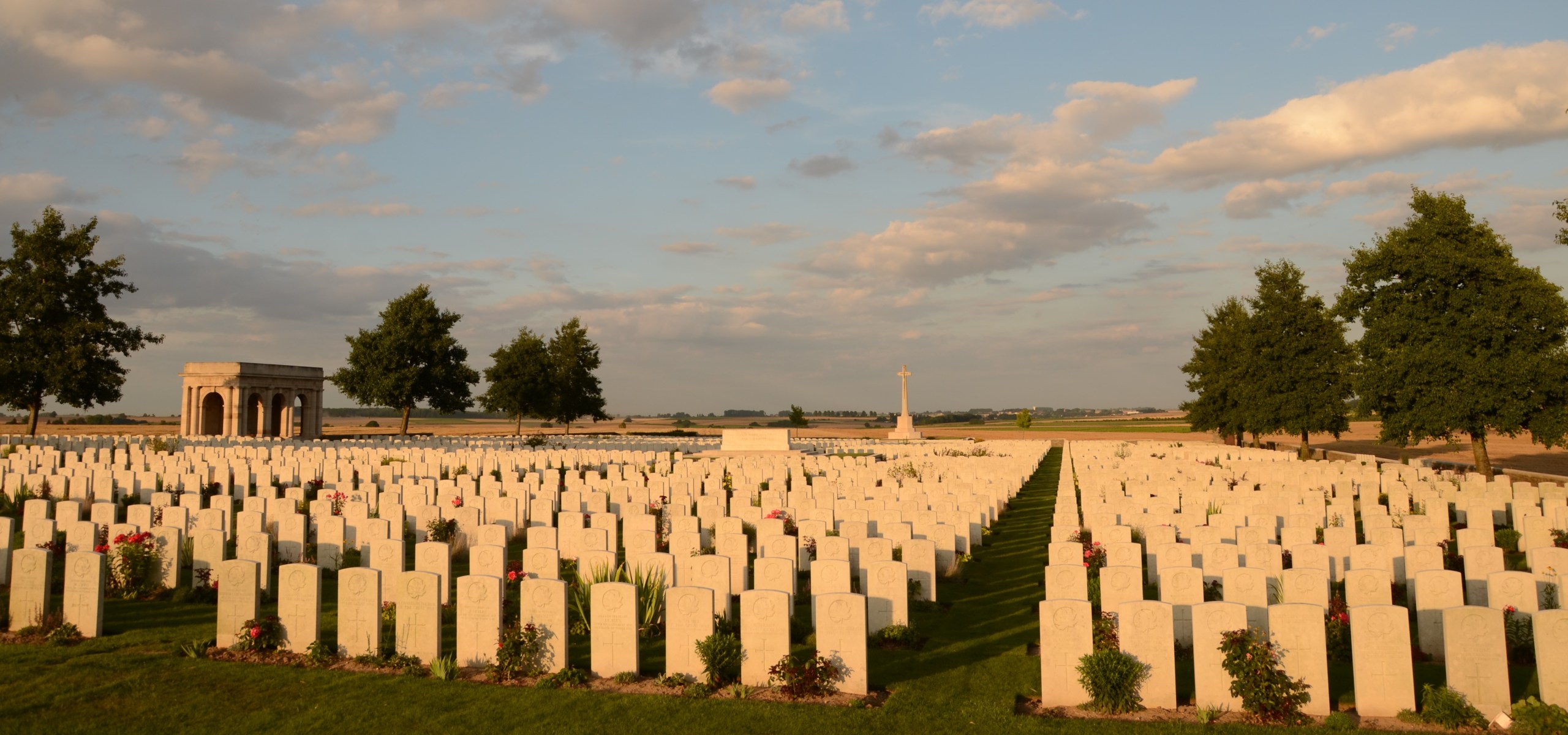
Miraumont is a village about 14.5 kilometres north-north-east of Albert and ADANAC Military Cemetery is some 3 kilometres south of the village on the east side of the road to Courcelette (D107). The cemetery is signposted in the centre of Miraumont.

ADANAC Military Cemetery

ADANAC Military Cemetery

ADANAC Military Cemetery

ADANAC Military Cemetery

ADANAC Military Cemetery

ADANAC Military Cemetery

ADANAC Military Cemetery

ADANAC Military Cemetery
The villages of Miraumont and Pys were occupied on 24-25 February 1917 following the German withdrawal to the Hindenburg Line. They were retaken by the Germans on 25 March 1918, but recovered the 42nd (East Lancashire) Division on the following 24 August. Adanac Military Cemetery (the name was formed by reversing the name “Canada”) was made after the Armistice when graves were brought in from the battlefields and small cemeteries surrounding Miraumont, and particularly from the Canadian battlefields round Courcelette. One grave (Plot IV, Row D, Grave 30) was left in its original position.

ADANAC: Lt R.H.P. Arnholz

ADANAC: Lt R.H.P. Arnholz

ADANAC: Lt A.R.C. Eaton

ADANAC: Lt A.R.C. Eaton

ADANAC: Sgt S. Forsyth VC NZEF

ADANAC: Piper James Richardson VC

ADANAC: Pte J. McArthur
There are now 3,186 Commonwealth burials and commemorations of the First World War in this cemetery. 1,708 of the burials are unidentified but special memorials commemorate 13 casualties known or believed to be buried among them. The cemetery was designed by Sir Herbert Baker.
Number of burials by Unit
| Northumberland Fusiliers |
64
|
New Zealand units |
64
|
|
| Royal Warwickshire Regiment |
51
|
16th Bn. Canadian Inf. (Manitoba Regiment) |
48
|
|
| 58th Bn. Canadian Inf. (2nd Central Ontario Regiment) |
45
|
3rd Bn. Canadian Inf. (1st Central Ontario Regiment) |
41
|
|
| 50th Bn. Canadian Inf. (Alberta Regiment) |
41
|
13th Bn. Canadian Inf. (Quebec Regiment) |
39
|
|
| 4th Bn. Canadian Inf. (1st Central Ontario Regiment) |
38
|
Green Howards – Yorkshire Regiment |
38
|
|
| Durham Light Infantry |
36
|
87th Bn. Canadian Inf. (Quebec Regiment) |
35
|
|
| Australian units |
34
|
Lancashire Fusiliers |
30
|
|
| 44th Bn. Canadian Inf. (New Brunswick Regiment) |
29
|
Manchester Regiment |
29
|
|
| Royal Field Artillery |
29
|
75th Bn. Canadian Inf. (1st Central Ontario Regiment) |
28
|
|
| Cameron Highlanders |
26
|
Machine Gun Corps – Infantry |
26
|
|
| Border Regiment |
25
|
Gordon Highlanders |
25
|
|
| Bedfordshire Regiment |
24
|
Cheshire Regiment |
24
|
|
| Argyll & Sutherland Highlanders |
22
|
47th Bn. Canadian Inf. (Western Ontario Regiment) |
21
|
|
| 29th Bn. Canadian Inf. (British Columbia Regiment) |
19
|
Duke of Wellington – West Riding Regiment |
19
|
|
| West Yorkshire Regiment |
19
|
54th Bn. Canadian Inf. (2nd Central Ontario Regiment) |
18
|
|
| 102nd Bn. Canadian Inf. (2nd Central Ontario Regiment) |
18
|
East Surrey Regiment |
18
|
|
| Essex Regiment |
18
|
York & Lancaster Regiment |
18
|
|
| 24th Bn. Canadian Inf. (Quebec Regiment) |
17
|
Norfolk Regiment |
17
|
|
| Seaforth Highlanders |
17
|
Royal Naval Division |
16
|
|
| Gloucester Regiment |
15
|
1st Bn. Canadian Pioneers |
14
|
|
| Highland Light Infantry |
12
|
Queen’s – Royal West Surrey Regiment |
12
|
|
| South Staffordshire Regiment |
12
|
46th Bn. Canadian Inf. (Saskatchewan Regiment) |
11
|
|
| Royal Engineers |
11
|
18th Bn. Canadian Inf. (Western Ontario Regiment) |
10
|
|
| 38th Bn. Canadian Inf. (Eastern Ontario Regiment) |
10
|
East Lancashire Regiment |
10
|
|
| 72nd Bn. Canadian Inf. (British Columbia Regiment) |
9
|
Royal Scots – Lothian Regiment |
9
|
|
| King’s Own Scottish Borderers |
8
|
King’s Own Yorkshire Light Infantry |
8
|
|
| Middlesex Regiment |
8
|
Royal Fusiliers – City of London Regiment |
8
|
|
| Royal West Kent Regiment – Queen’s Own |
8
|
Black Watch – Royal Highlanders |
7
|
|
| 31st Bn. Canadian Inf. (Alberta Regiment) |
7
|
67th Bn. Canadian Pioneers |
7
|
|
| Duke of Cornwall’s Light Infantry |
7
|
Royal Scots Fusiliers |
7
|
|
| 28th Bn. (Saskatchewan Regiment) |
6
|
2nd Bn. Canadian Inf. (Eastern Ontario Regiment) |
5
|
|
| 11th Brig. Canadian Field Artillery |
5
|
73rd Bn. Canadian Inf. (Royal Highlanders) |
5
|
|
| Hertfordshire Regiment |
5
|
Lincolnshire Regiment |
5
|
|
| 24th Bn. London Regiment – The Queen’s |
5
|
Oxfordshire & Buckinghamshire Light Infantry |
5
|
|
| Royal Berkshire Regiment |
5
|
Cameronians – Scottish Rifles |
4
|
|
| 15th Bn. Canadian Inf. (1st Central Ontario Regiment) |
4
|
26th Bn. Canadian Inf. (New Brunswick Regiment) |
4
|
|
| 78th Bn. Canadian Inf. (Manitoba Regiment) |
4
|
East Yorkshire Regiment |
4
|
|
| King’s Liverpool Regiment |
4
|
King’s Royal Rifle Corps |
4
|
|
| Sherwood Foresters – Notts. & Derbys Regiment |
4
|
Tank Corps |
4
|
|
| Worcestershire Regiment |
4
|
20th Bn. Canadian Inf. (1st Central Ontario Regiment) |
3
|
|
| 22nd Bn. Canadian Inf. (Quebec Regiment) |
3
|
21st Bn. London Regiment First – Surrey Rifles |
3
|
|
| Rifle Brigade |
3
|
Royal Canadian Regiment |
3
|
|
| Royal Welsh Fusiliers |
3
|
19th Bn. Canadian Inf. (1st Central Ontario Regiment) |
2
|
|
| 43rd Bn. Canadian Inf. (Manitoba Regiment) |
2
|
Canadian Machine Gun Corps |
2
|
|
| King’s Shropshire Light Infantry |
2
|
Leicestershire Regiment |
2
|
|
| Northamptonshire Regiment |
2
|
Royal Army Medical Corps |
2
|
|
| Royal Irish Regiment |
2
|
Royal Sussex Regiment |
2
|
|
| Somerset Light Infantry |
2
|
5th Bn. Canadian Inf. (CMR, Quebec Regiment) |
1
|
|
| 6th Bn. Canadian Machine Gun Corps |
1
|
8th Bn. Canadian Inf. (Manitoba Regiment) |
1
|
|
| 14th Bn. Canadian Inf. (Quebec Regiment) |
1
|
21st Bn. Canadian Inf. (Eastern Ontario Regiment) |
1
|
|
| Canadian Army Medical Corps |
1
|
Highland Cyclist Bn. |
1
|
|
| Loyal North Lancashire Regiment |
1
|
Royal Army Service Corps |
1
|
|
| Royal Flying Corps/Royal Air Force |
1
|
Royal Garrison Artillery |
1
|
|
| Suffolk Regiment |
1
|
South Wales Borderers |
1
|
|
| Identified burials |
1473
|
|||
| Unidentified burials: | ||||
| United Kingdom – sailors, soldiers and airmen |
1170
|
|||
| Canadian units |
512
|
|||
| Australian units |
19
|
|||
| New Zealand units |
6
|
|||
| Wholly unidentified |
5
|
|||
| Total Unidentified burials |
1712
|
|||
| Total burials |
3185
|

Thiepval is a village on the D151 road about 8 kilometres north of the town of Albert. Mill Road Cemetery (signposted at Thiepval) is about 1kilometre north-west of the village on the north side of the D73 road to Hamel. Access to the cemetery, 500 metres from the road, is by a track (suitable for cars).

Mill Road Cemetery, Thiepval

Mill Road Cemetery, Thiepval

Mill Road Cemetery, Thiepval

Mill Road Cemetery, Thiepval

Mill Road Cemetery, Thiepval

Mill Road Cemetery, Thiepval

Mill Road Cemetery, Thiepval
Before the 1916 Battle of the Somme, Thiepval was in German hands, garrisoned by the 160th Regiment of Wurtembergers. On 1 July 1916, it was attacked unsuccessfully by the 36th (Ulster) Division and no further attempt on the village was possible until 26 September, when it was captured by the 18th Division. Thiepval remained under Allied occupation until 25 March 1918 when it was lost during the great German offensive, but it was retaken on the following 24 August by the 17th and 38th (Welsh) Divisions. Mill Road Cemetery was made in the spring of 1917 when the German withdrawal to the Hindenburg line allowed the battlefield to be cleared. At the Armistice, it contained 260 burials but was then greatly enlarged when graves were brought in from smaller cemeteries and from the battlefields of Beaumont-Hamel and Thiepval.

Mill Road Cemetery, Thiepval – Winter 2019

Mill Road Cemetery, Thiepval – Winter 2019

Mill Road Cemetery, Thiepval – Winter 2019

Mill Road Cemetery, Thiepval – Winter 2019

Mill Road Cemetery, Thiepval – Winter 2019

Mill Road Cemetery, Thiepval – Winter 2019

Mill Road Cemetery, Thiepval – Winter 2019

Mill Road Cemetery, Thiepval – Winter 2019
There are now 1,304 Commonwealth servicemen of the First World War buried or commemorated in the cemetery. 815 of the burials are unidentified but there are special memorials to three casualties believed to be buried among them and three others buried in Divion Road Cemetery No 1, whose graves were destroyed by shell fire. The cemetery was designed by Sir Herbert Baker.
Number of Burials by Unit
| Duke of Wellington – West Riding Regiment |
92
|
West Yorkshire Regiment |
54
|
|
| Royal Inniskilling Fusiliers |
49
|
Royal Irish Rifles |
43
|
|
| Black Watch Regiment |
19
|
Queen’s – Royal West Surrey Regiment |
19
|
|
| Queen’s Own – Royal West Kent Regiment |
18
|
Royal Sussex Regiment |
18
|
|
| Notts. & Derbyshire Regiment |
16
|
Bedfordshire Regiment |
15
|
|
| Cambridgeshire Regiment |
12
|
Northumberland Fusiliers |
10
|
|
| Cheshire Regiment |
8
|
East Surrey Regiment |
8
|
|
| Buffs – East Kent Regiment |
7
|
Dorsetshire Regiment |
6
|
|
| Gloucestershire Regiment |
6
|
King’s Royal Rifle Corps |
6
|
|
| Leicestershire Regiment |
6
|
Machine Gun Corps |
6
|
|
| Suffolk Regiment |
6
|
Oxford & Buckinghamshire Light Infantry |
5
|
|
| Royal Berkshire Regiment |
5
|
Royal Navy Division – Infantry |
5
|
|
| East Yorkshire Regiment |
4
|
King’s Own Yorkshire Light Infantry |
4
|
|
| Lancashire Fusiliers |
4
|
Rifle Brigade |
4
|
|
| Durham Light Infantry |
3
|
Hampshire Regiment |
3
|
|
| Loyal North Lancashire Regiment |
3
|
Norfolk Regiment |
3
|
|
| Royal Warwickshire Regiment |
3
|
Welsh Regiment |
3
|
|
| Royal Field Artillery |
2
|
Royal Irish Fusiliers |
2
|
|
| South Lancashire Regiment |
2
|
East Lancashire Regiment |
1
|
|
| Green Howards – Yorkshire Regiment |
1
|
King’s Own Royal Lancaster Regiment |
1
|
|
| Lincolnshire Regiment |
1
|
Manchester Regiment |
1
|
|
| Monmouthshire Regiment |
1
|
Royal Fusiliers |
1
|
|
| South Staffordshire Regiment |
1
|
Worcestershire Regiment |
1
|
|
| York & Lancaster Regiment |
1
|
|||
| Identified burials |
489
|
|||
| Unidentified burials |
815
|
|||
| Total burials |
1304
|
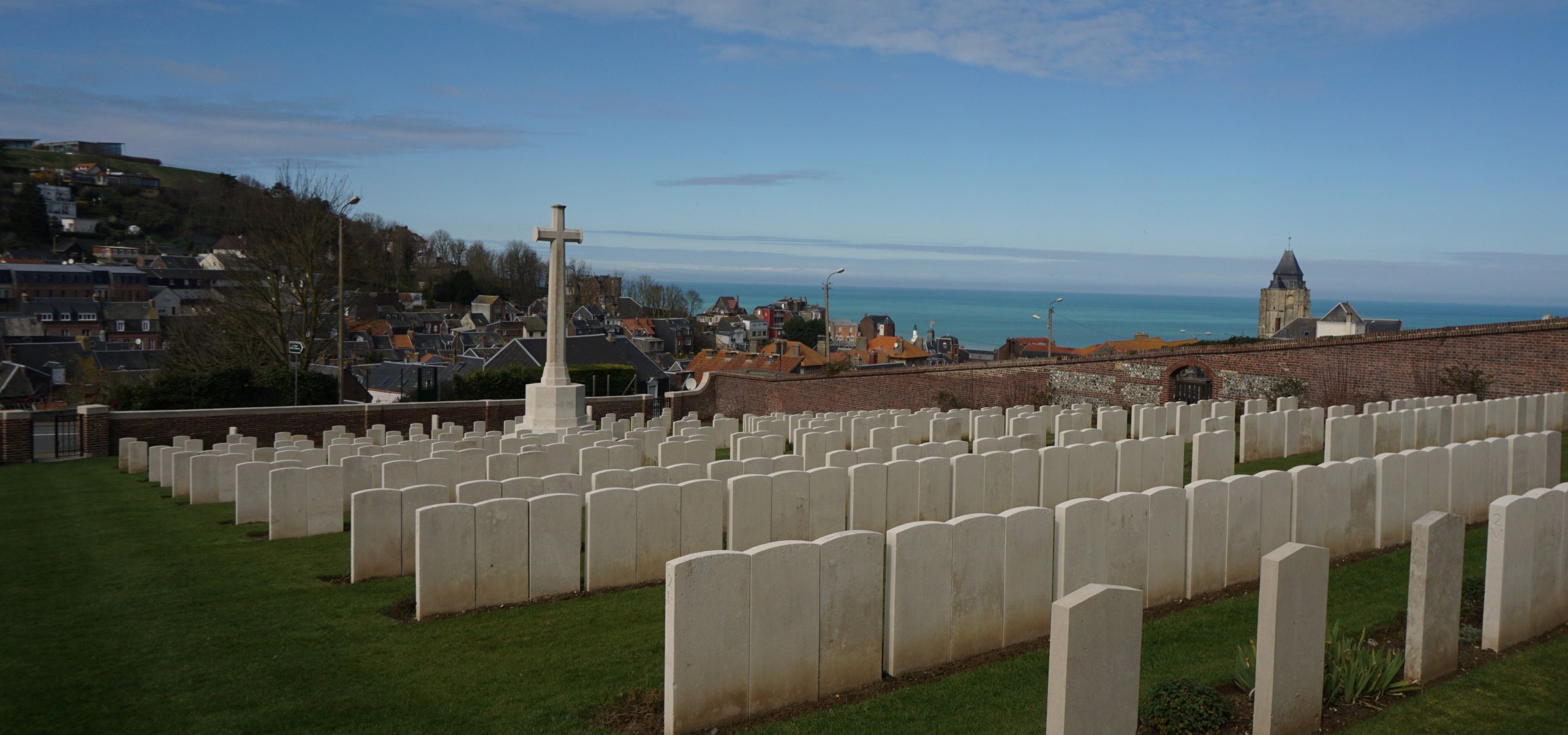
During the First World War, Le Treport was an important hospital centre. No 3 General Hospital was established there in November 1914, No 16 General Hospital in February 1915, No 2 Canadian General Hospital in March 1915, No 3 Convalescent Depot in June 1915 and Lady Murray’s BRCS Hospital in July 1916. These hospitals contained nearly 10,000 beds. No 47 General Hospital arrived in March 1917 and later that year, a divisional rest camp and a tank training depot were established in the neighbourhood. By March 1919, the hospitals had been closed and Le Treport became the headquarters of the 68th Division, which re-formed there before going to the Rhine. The divisional supply depot was closed in June 1919.

Le Treport Military Cemetery

Le Treport Military Cemetery

Le Treport Military Cemetery

Le Treport Military Cemetery

Le Treport Military Cemetery

Le Treport Military Cemetery

Le Treport Military Cemetery

Le Treport Military Cemetery
Le Treport Military Cemetery was started in late 1914. There are now 445 Commonwealth burials of the First World War in the cemetery. Three of the four Second World War burials are unidentified.

Le Treport: Lt C.H. Hooper

Le Treport: Lt C.H. Hooper

Le Treport: 2/Lt C.J.T. Carew

Le Treport: 2/Lt C.J.T. Carew
The cemetery, one of the first three Commission cemeteries to be built after the First World war, was designed by Sir Reginald Blomfield.

Le Treport Military Cemetery 1920

Forceville is a village some 10 kilometres north-west of Albert on the road to Doullens. Forceville Communal Cemetery and Extension lies to the west of the village of Forceville, 20 kilometres from Doullens and 10 kilometres from Albert, on the D938, the main road between these two places.

Forceville Communal Cemetery & Extension

Forceville Communal Cemetery & Extension

Forceville Communal Cemetery & Extension

Forceville Communal Cemetery & Extension

Forceville Communal Cemetery & Extension
Commonwealth forces took over this section of the front line from the French in 1915 and in early August, land to the south of the communal cemetery was set aside for military graves. Field ambulances were stationed in the village from February to July 1916. Plot I of the extension contains the graves of men who died on the Somme front from September 1915 to June 1916. The graves in Plot II relate to the Somme offensive of July and August 1916 and those in Plot III to the operations of the autumn of 1916. In the spring of 1917, the front line moved to the east and it was not until the German advances of April 1918, which came to a halt just east of the cemetery, that further burials were made in Plot IV.

Forceville: Surgeon Lieutenant A.L, Pearce Gould

Forceville: Surgeon Lieutenant A.L, Pearce Gould

Forceville Communal Cemetery and Extension

Forceville Communal Cemetery and Extension

Forceville Communal Cemetery and Extension

Forceville Communal Cemetery and Extension

Forceville Communal Cemetery and Extension

Forceville Communal Cemetery and Extension
There are now 304 Commonwealth burials of the First World War in this site, three of them in the communal cemetery adjoining the extension. The extension also contains seven German war graves. The cemetery extension, one of the first three Commission sites to be built after the First World war, was designed by Sir Reginald Blomfield.

Forceville Communal Cemetery and Extension 1920
The Cemetery contains two unique graves; the original prototype headstones for the graves of Unknown Soldiers. The text on these was later simplified by Rudyard Kipling, as the cost of engraving so many headstones with this much text was too high.

Unknown Soldier – Forceville Communal Cemetery and Extension

Unknown Soldier – Forceville Communal Cemetery and Extension
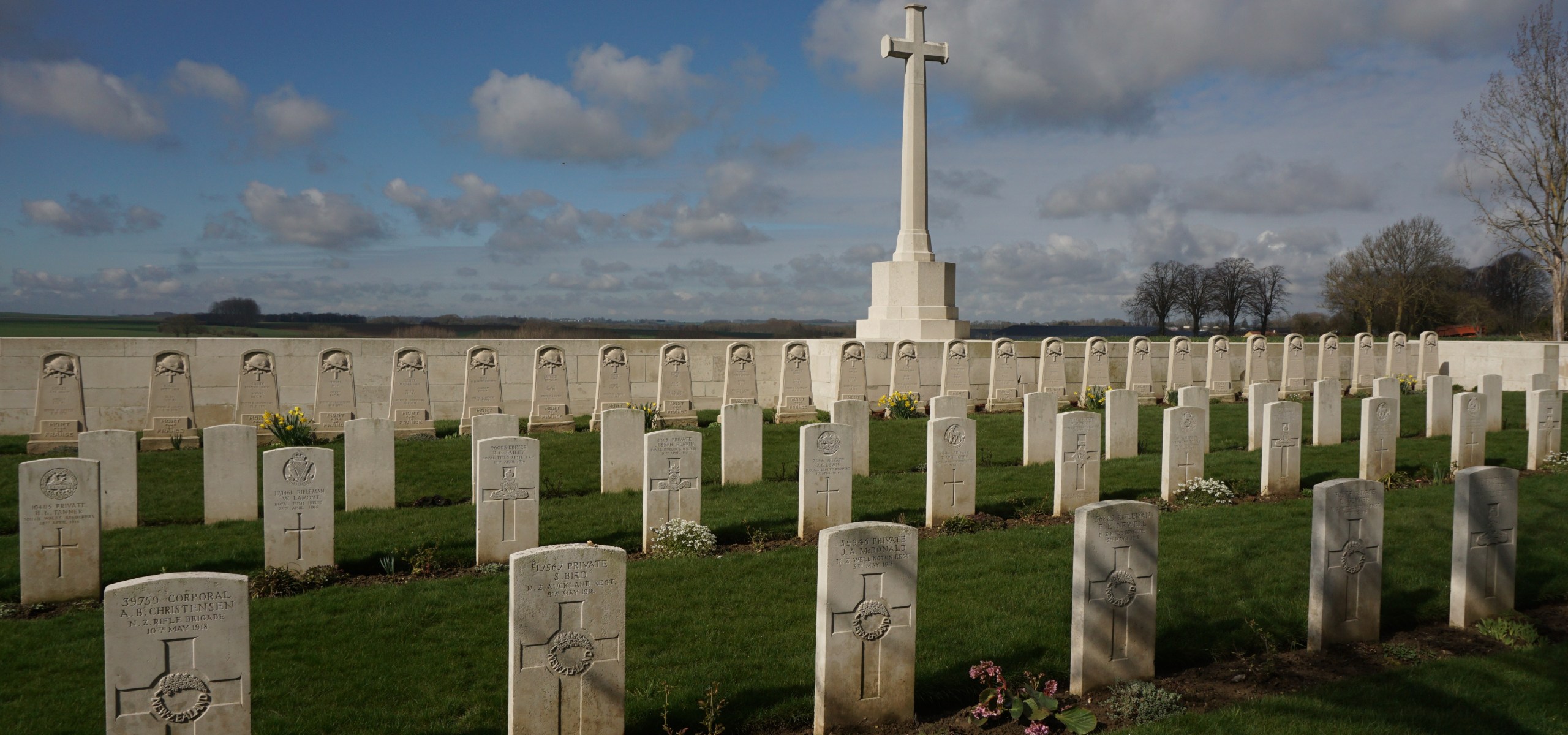
Louvencourt is a village 13 kilometres south-east of Doullens on the road to Albert (D938). Louvencourt Military Cemetery is on the south-eastern side of the village.

Louvencourt Military Cemetery

Louvencourt Military Cemetery

Louvencourt Military Cemetery

Louvencourt Military Cemetery

Louvencourt Military Cemetery
From July 1915 to August 1916, field ambulances were established at Louvencourt, which was nearly 10 kilometres behind the front line on 1st July 1916. Following the 1916 Somme offensive, these medical units moved further east and the cemetery was little used until the German advances of April 1918 pushed the Allied line back to its old position. The graves of 1918, in rows D and E, relate to the climax of that fighting. There are now 151 Commonwealth burials of the First World War in this cemetery and 76 French war graves dating from 1915.

Louvencourt: Roland Leighton

Louvencourt: Roland Leighton

Louvencourt: Brigadier General Bertie Prowse DSO

Louvencourt: Brigadier General Bertie Prowse DSO
The cemetery also contains three graves from the Second World War. The cemetery, one of the first three Commission cemeteries to be built after the First World War, was designed by Sir Reginald Blomfield.
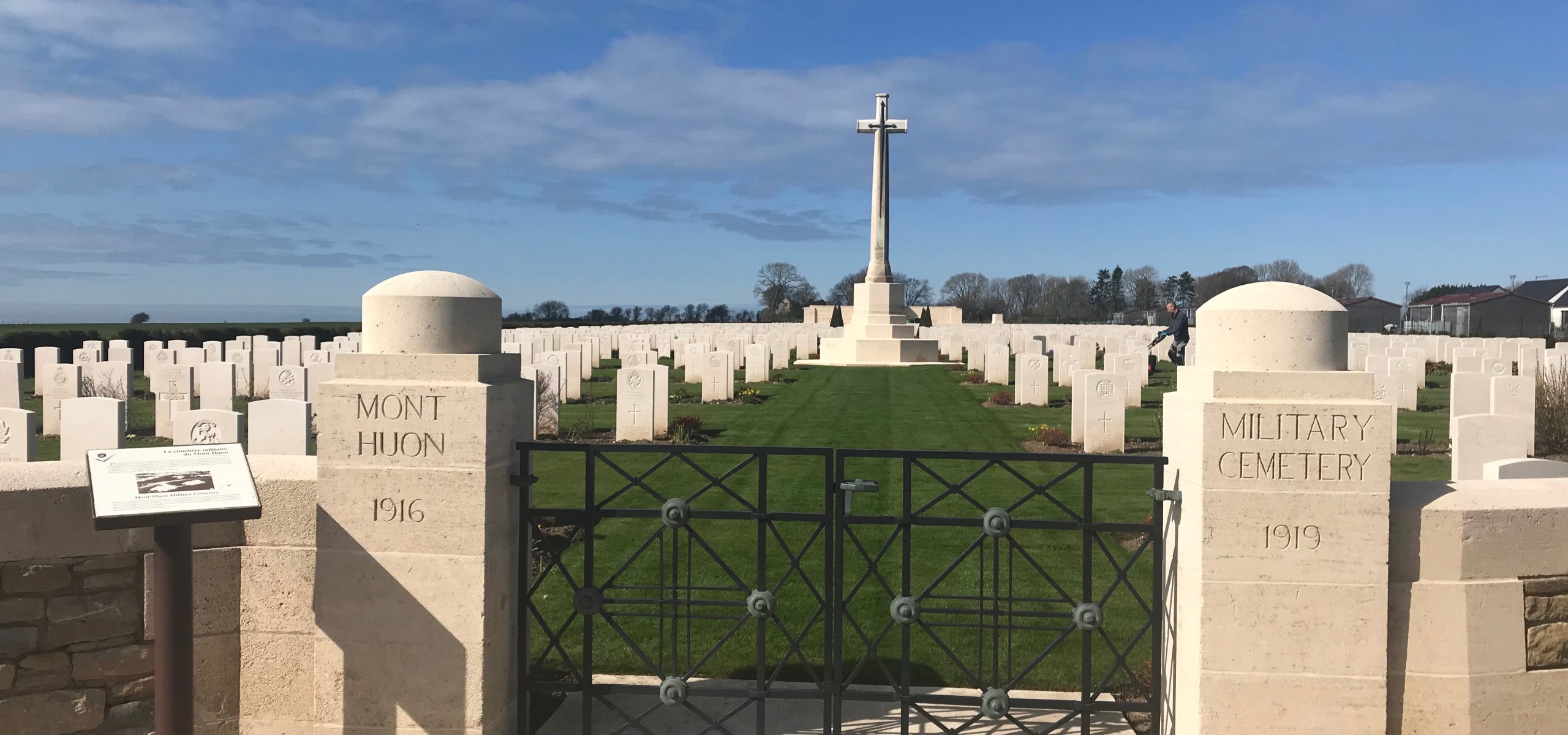
Le Treport is a small seaport 25 kilometres north-east of Dieppe. Mont Huon Military Cemetery is 1.5 kilometres south of the town. Go towards the centre of Le Treport and then follow the Littoral/Dieppe sign. The Cemetery stands on the D940.

Mont Huon Military Cemetery

Mont Huon Military Cemetery

Mont Huon Military Cemetery

Mont Huon Military Cemetery

Mont Huon Military Cemetery
During the First World War, Le Treport was an important hospital centre and by July 1916, the town contained three general hospitals (the 3rd, 16th and 2nd Canadian), No. 3 Convalescent Depot and Lady Murray’s BRCS Hospital. The 7th Canadian, 47th and 16th USA General Hospitals arrived later, but all of the hospitals had closed by March 1919. As the original military cemetery at Le Treport filled, it became necessary to use the new site at Mont Huon.

Mont Hun: Mrs Gertrude Chambers

Mont Huon: Lt-Col M. McNeill CMG DSO

Mont Huon: Pte J.O. Thomas

Mont Huon: Cook Albert Edward Dixon
There are now 2,128 Commonwealth burials of the First World War in the cemetery and seven from the Second World War. The cemetery also contains more than 200 German war graves. The cemetery was designed by Sir Reginald Blomfield.

Dernancourt is a village 3 kilometres south of Albert. The Communal Cemetery is a little west of the village, and the Extension is on the north-west side of the Communal Cemetery.

Dernancourt Communal Cemetery Extension

Dernancourt Communal Cemetery Extension

Dernancourt Communal Cemetery Extension

Dernancourt Communal Cemetery Extension

Dernancourt Communal Cemetery Extension

Dernancourt Communal Cemetery Extension
Field ambulances used Dernancourt Communal Cemetery for Commonwealth burials from September 1915 to August 1916, and again during the German advance of March 1918. It contains 127 Commonwealth burials of the First World War. The XV Corps Main Dressing Station was formed at Dernancourt in August 1916, when the adjoining Dernancourt Communal Cemetery Extension was opened. The 45th and 1st/1st South Midland Casualty Clearing Stations (CCS) came in September 1916 and remained until March 1917. The 3rd Australian CCS was here in March and April 1917, and the 56th from April 1917 to February 1918. The 3rd Casualty Clearing Station came in March 1918 but on 26 March, Dernancourt was evacuated ahead of the German advance, and the extension remained in their hands until the village was recaptured on 9 August by the 12th Division and the 33rd American division. In September it was again used by the 47th, 48th and 55th Casualty Clearing Stations under the name of “Edgehill”, due to the rising ground on the north-west. At the Armistice, the extension contained more than 1,700 burials; it was then enlarged when graves were brought in from small cemeteries and isolated positions in the immediate neighbourhood.

Dernancourt: Pte E.G.R.Lempriere

Dernancourt: Chinese Labour Corps

Dernancourt: Sgt T.J. Harris VC

Dernancourt: Sub-Lt J.F. Bunce MC

Dernancourt: Capt Morton Peto MC

Dernancourt: Capt M. Peto MC

Dernancourt: Lt Stuart Boyd

Dernancourt: 2/Lt Stuart Boyd
The extension now contains 2,162 Commonwealth burials and commemorations of the First World War. 177 of the burials are unidentified, but there are special memorials to 29 casualties known or believed to be buried among them, and to two buried at Albert Road Cemetery Buire-sur-Ancre whose grave could not be found on concentration. The extension was designed by Sir Edwin Lutyens.
Number of burials by Unit
| Australian burials |
376
|
Royal Field Artillery |
95
|
|
| Durham Light Infantry |
86
|
Northumberland Fusiliers |
74
|
|
| New Zealand burials |
50
|
Royal Engineers |
45
|
|
| King’s Royal Rifle Corps |
43
|
Royal Fusiliers – City of London Regt. |
42
|
|
| Machine Gun Corps – Infantry |
41
|
Royal Berkshire Regt. |
40
|
|
| Royal Garrison Artillery |
37
|
Green Howards – Yorkshire Regt. |
36
|
|
| Royal Naval Division |
34
|
Cameron Highlanders |
33
|
|
| South African Regt. |
30
|
Argyll & Sutherland Highlanders |
29
|
|
| Highland Light Infantry |
28
|
Northamptonshire Regt. |
26
|
|
| Royal Scots – Lothian Regt. |
26
|
Essex Regt. |
24
|
|
| Rifle Brigade |
22
|
Seaforth Highlanders |
22
|
|
| Gloucestershire Regt. |
21
|
Gordon Highlanders |
21
|
|
| Royal Sussex Regt. |
21
|
19th Bn. London Regt – St. Pancras |
19
|
|
| Black Watch – Royal Highlanders |
19
|
Middlesex Regt. |
19
|
|
| Royal Welsh Fusiliers |
19
|
Royal West Kent Regt. (Queen’s Own) |
19
|
|
| South Staffordshire Regt. |
18
|
Buffs – East Kent Regt. |
17
|
|
| King’s Own Scottish Borderers |
17
|
King’s Liverpool Regt. |
16
|
|
| Queen’s – Royal West Surrey Regt. |
16
|
Welsh Regt. |
15
|
|
| Worcestershire Regt. |
15
|
15th Bn. London Regt-PWO Civil Service Rifles |
14
|
|
| Border Regt. |
14
|
East Surrey Regt. |
14
|
|
| Royal Army Service Corps |
14
|
Sherwood Foresters – Notts. & Derbys. Regt. |
14
|
|
| 23rd Bn. London Regt |
13
|
Royal Scots Fusiliers |
13
|
|
| 22nd Bn. London Regt – The Queen’s |
12
|
Suffolk Regt. |
12
|
|
| West Yorkshire Regt. |
12
|
York & Lancaster Regt. |
12
|
|
| 7th Bn. London Regt. |
11
|
Cameronians – Scottish Rifles |
11
|
|
| Duke of Wellington’s – West Riding Regt. |
11
|
Lancashire Fusiliers |
11
|
|
| Manchester Regt. |
11
|
Royal Army Medical Corps |
11
|
|
| 17th Bn. London Regt – Poplar & Stepney Rifles |
10
|
20th Bn. London Regt – Blackheath & Woolwich |
10
|
|
| 8th Bn. London Regt. – Post Office Rifles |
10
|
East Yorkshire Regt. |
10
|
|
| Loyal North Lancashire Regt. |
10
|
21st Bn. London Regt – First Surrey Rifles |
9
|
|
| 6th Bn. London Regt. – London Rifles |
9
|
King’s Own Yorkshire Light Infantry |
9
|
|
| Norfolk Regt. |
9
|
18th Bn. London Regt – London Irish Rifles |
8
|
|
| 3rd Bn. London Regt. – Royal Fusiliers |
8
|
Bedfordshire Regt. |
8
|
|
| Canadian burials |
8
|
Ox. & Bucks. Light Infantry |
8
|
|
| Royal Munster Fusiliers |
8
|
North Staffordshire Regt. |
7
|
|
| Cheshire Regt. |
6
|
Lincolnshire Regt. |
6
|
|
| Somerset Light Infantry |
6
|
South Wales Borderers |
6
|
|
| 12th Bn. London Regt. – The Rangers |
5
|
Devonshire Regt. |
5
|
|
| Duke of Cornwall’s Light Infantry |
5
|
Indian Labour Corps |
5
|
|
| Leicestershire Regt. |
5
|
Royal Warwickshire Regt. |
5
|
|
| 1st Bn. London Regt. – Royal Fusiliers |
4
|
King’s Shropshire Light Infantry |
4
|
|
| 10th Bn. London Regt. – Hackney |
3
|
24th Bn. London Regt – The Queen’s |
3
|
|
| 3rd Hussars |
3
|
Chinese Labour Force |
3
|
|
| Military Police Corps |
3
|
Royal Inniskilling Fusiliers |
3
|
|
| South Lancashire Regt. |
3
|
16th Bn. London Regt-Queen’s Westminster Rifles |
2
|
|
| 19th Royal Hussars |
2
|
2/10th Bn. London Regt – Hackney |
2
|
|
| Cambridgeshire Regt. |
2
|
Dorsetshire Regt. |
2
|
|
| East Lancashire Regt. |
2
|
Royal Army Ordnance Corps |
2
|
|
| Wiltshire Regt. |
2
|
11th Hussars, Prince Albert’s Own |
1
|
|
| 2/20th Bn. London Regt – Blackheath & Woolwich |
1
|
2/4th Bn. London Regt – Royal Fusiliers |
1
|
|
| 25th Bn. London Regt – Cyclist Bn. |
1
|
2nd Bn. London Regt. – Royal Fusiliers |
1
|
|
| 36th Jacob’s Horse |
1
|
4th Dragoon Guards |
1
|
|
| 5th Bn. London Regt. – London Rifle Brigade |
1
|
9th Bn. London Regt. – Queen Victoria’s Rifles |
1
|
|
| 9th Lancers |
1
|
Army Cycle Corps |
1
|
|
| British West Indies |
1
|
General List |
1
|
|
| Guards – Machine Gun Regt. |
1
|
Hampshire Regt. |
1
|
|
| Hertfordshire Regt. |
1
|
Honourable Artillery Company |
1
|
|
| Irish Guards |
1
|
King’s Own Royal Lancaster Regt. |
1
|
|
| Leinster Regt. |
1
|
Queen’s Bays |
1
|
|
| Royal Dublin Fusiliers |
1
|
Royal Flying Corps/Royal Air Force |
1
|
|
| Royal Horse Artillery |
1
|
Royal Irish Regt. |
1
|
|
| Identified British & Commonwealth burials |
1978
|
|||
| Indian Labour Corps |
5
|
|||
| Chinese Labour Force |
3
|
|||
| German Burials |
3
|
|||
| Total Identified |
1989
|
|||
| Unidentified burials: | ||||
| United Kingdom |
125
|
|||
| Australia |
48
|
|||
| South Africa |
3
|
|||
| New Zealand |
1
|
|||
| Total Unidentified burials |
177
|
|||
| Total burials |
2166
|

At the end of the Great War, there were thousands of British burial grounds scattered across the old battlefields that had once formed the Western Front. Some of these were a mere handful of graves, others like Lijssenthoek near Poperinghe – then the largest British cemetery – nearly 10,000 graves. The Imperial War Graves Commission (now Commonwealth War Graves Commission) had been formed in 1917 to take on the perpetual care of these sites. Decisions had been made early on not to repatriate the dead, but how could these cemeteries be made permanent? And what should replace the wooden crosses?

Silent Cities: Typical British Cemetery in 1919
As war turned to peace, it was decided that headstones would replace crosses, permanent cemeteries would be constructed in stone, and that each would have an ‘English garden’ feel. It was writer Rudyard Kipling, whose only son had died in the war, that sometime in 1920/21 coined the phrase ‘Silent Cities’ to describe what meaning the war cemeteries had then, and in many respects still have today. The first three experimental cemeteries were constructed in France in 1920 and on 5th February 1920 the Sheffield Daily Telegraph reported:
BRITISH GRAVES IN FRANCE. A special correspondent of the Free Press Association in Paris learns that real progress now being made with the construction of the permanent cemeteries which are to replace the present burial grounds of British soldiers killed on the French battlefields Three cemeteries in the Somme area at Le Treport, Forceville and Acheux, have been nearly completed. In conformity with the pattern decided upon by the Graves Registration Committee, according to which each cemetery is surrounded by a stone wall and each grave has its own engraved headstone In all, there are over 1,500 Britsh burial grounds in France, and of these 300 have already been taken over by officials of the Commission. Work will be in full progress as soon as the spring weather sets in, and it is expected that 100 cemeteries will be finished by the end of this summer. One design has been approved for all cemeteries, and owing to the immense numbers affected it will probably not be possible to consult individual wishes as to whether a stone head-piece should be erected or the original wooden cross left as it stands today.
It took another eighteen years for the cemeteries to be completed, over 2,000 of them in Belgium and France, and the final one finished less than a year before the outbreak of the Second World War. In the 1920s and 30s they were visited by thousands of English-speaking people, often as part of large events such as the Royal British Legion’s ‘Great Pilgrimage’ in August 1928.
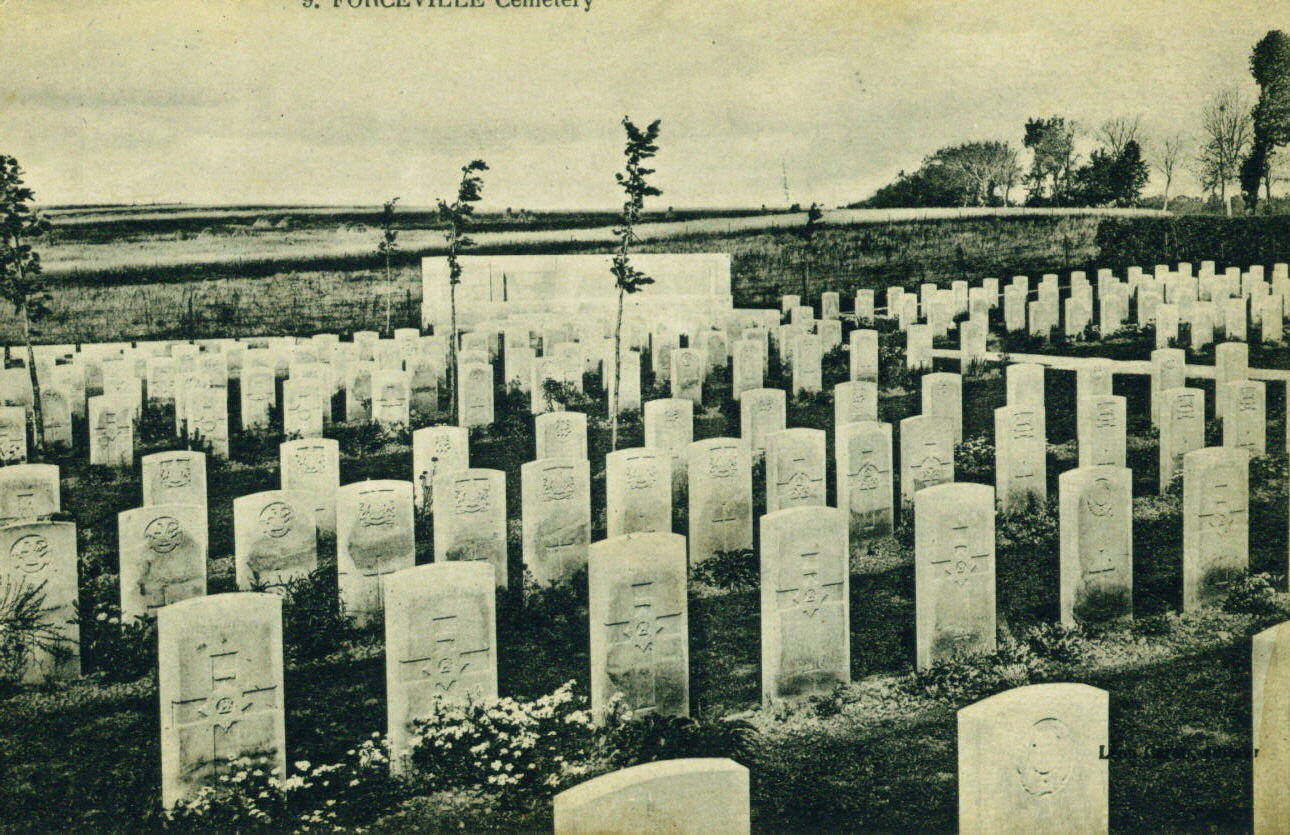
Silent Cities: Forceville 1920, one of the experimental cemeteries
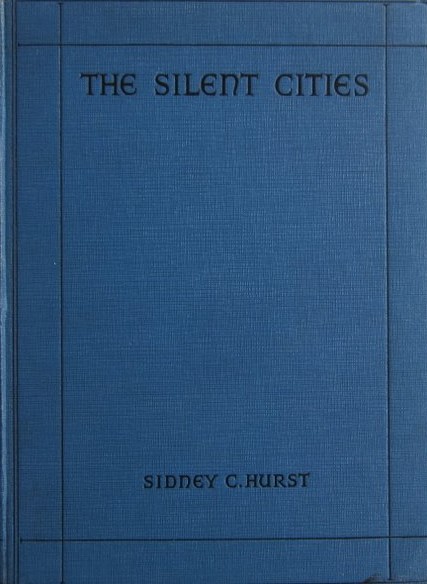 In 1929 Sydney Hurst published a book called The Silent Cities. Hurst had worked for the Imperial War Graves Commission and had spent much of his spare time travelling around the old battlefield area photographing the cemeteries. It was an amazing achievement at the time, and while original copies of the book are hard to find, it was reprinted by Naval and Military Press and is still available. This book is in some ways the ‘bible’ to visiting the cemeteries in France and Flanders, and the photographs in it themselves now give us a glimpse into what the cemeteries were like more than 80 years ago.
In my work as Head Battlefield Guide for Leger Holidays, and over many decades of visiting the Old Front Line, I have been fortunate to visit many of the Silent Cities, but not all. I’ve literally taken thousands of photos of the cemeteries from the 1980s until today, but what to do with them?
A new part of this site will now be devoted to the Silent Cities and it can be accessed via this link: Silent Cities on WW1 Revisited.
For each cemetery, I will upload a host of images, including some older ones where I have them, and the information will come from the early Cemetery Registers published in the 1920s and 30s. Great War author Barry Cuttell very kindly gave me breakdowns of the burials of most cemeteries and where possible I will include this information too, along with a Google Maps map showing how to find it.
Do take time to subscribe to the Blog, follow me on Twitter for updates, or just regularly pop in to see what has been uploaded.
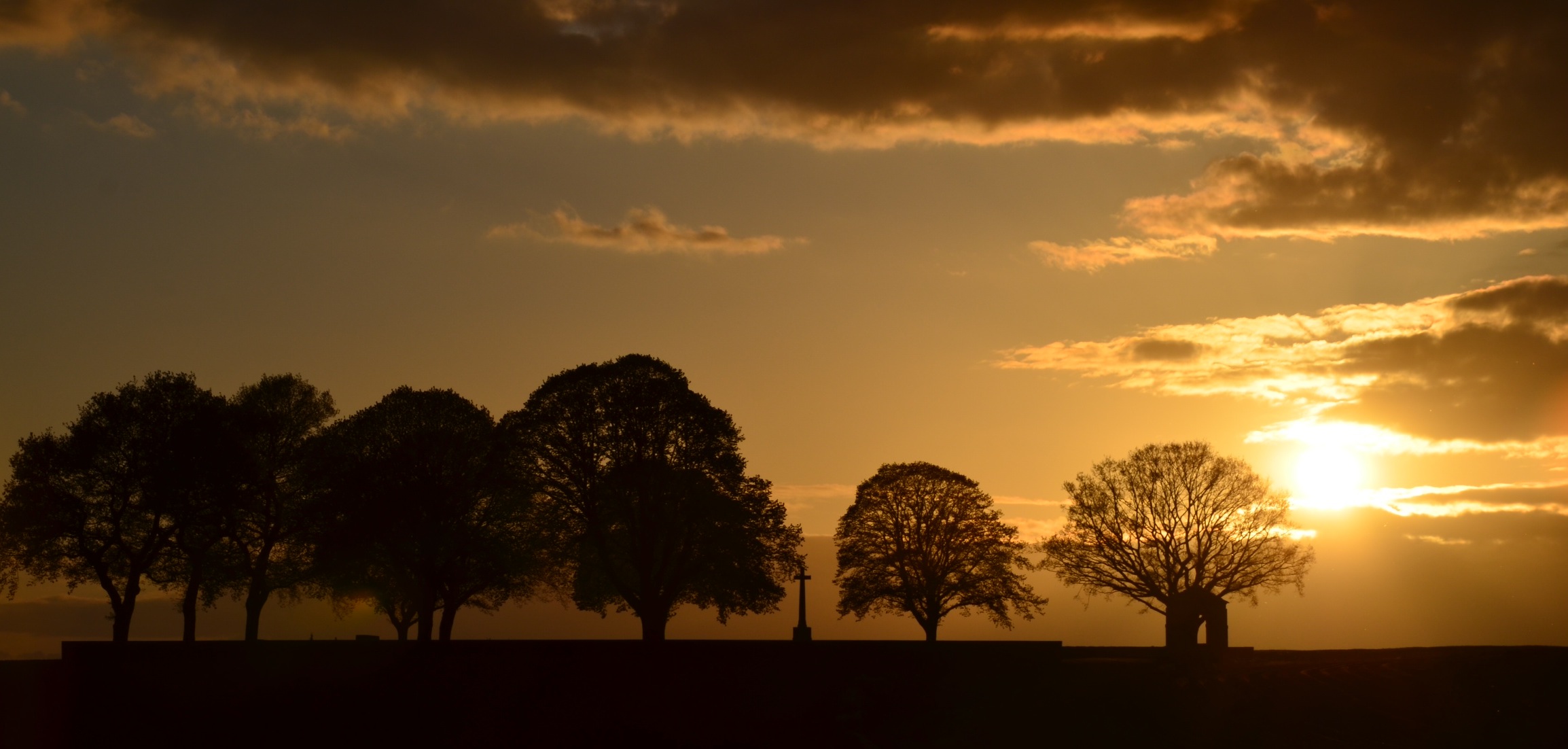
Courcelette British Cemetery at sunset 2014
Today the Silent Cities mark the crisscross paths of the Great War, and act as beacons to help us understand and connect to this landscape of memory and remembrance. The inscriptions give us insight into what this remembrance meant a century ago, whether that is personal statements on soldier’s graves or Kipling’s moving and powerful ‘Known Unto God’ on the headstones of unknown soldiers. These places and these words still have a resonance today, and I hope WW1 Revisited will inspire a few people to make the journey themselves.

Details
Pozières is a village some 6 kilometres north-east of Albert, and the Cemetery, which is enclosed by the Pozières Memorial, is a little south-west of the village on the north side of the main road, D929, from Albert to Pozières.

Pozières British Cemetery

Pozières British Cemetery

Pozières British Cemetery

Pozières British Cemetery

Pozières British Cemetery

Pozières British Cemetery
The village of Pozières was attacked on 23 July 1916 by the 1st Australian and 48th (South Midland) Divisions and was taken on the following day. It was lost on 24-25 March 1918, during the great German advance, and recaptured by the 17th Division on the following 24 August. Plot II of Pozières British Cemetery contains the original burials of 1916, 1917 and 1918, carried out by fighting units and field ambulances. The remaining plots were made after the Armistice when graves were brought in from the battlefields immediately surrounding the cemetery, the majority of them of soldiers who died in the Autumn of 1916, but a few represent the fighting in August 1918. There are now 2,756 Commonwealth servicemen buried or commemorated in this cemetery. 1,376 of the burials are unidentified but there are special memorials to 23 casualties known or believed to be buried among them.
The cemetery is enclosed by the Pozières Memorial, which relates to the period of crisis in March and April 1918 when the Allied Fifth Army was driven back by overwhelming numbers across the former Somme battlefields, and the months that followed before the Advance to Victory, which began on 8 August 1918. The Memorial commemorates over 14,000 casualties of the United Kingdom and 300 of the South African Forces who have no known grave and who died in France during the Fifth Army area retreat on the Somme from 21 March to 7 August 1918. The Corps and Regiments most largely represented are The Rifle Brigade with over 600 names, The Durham Light Infantry with approximately 600 names, the Machine Gun Corps with over 500, The Manchester Regiment with approximately 500 and The Royal Horse and Royal Field Artillery with over 400 names.
The cemetery and memorial were designed by W H Cowlishaw.
Number of burials by Unit
| Australian |
460
|
Canadian |
151
|
|
| Royal Warwickshire Regt |
61
|
Ox and Bucks Light Inf |
60
|
|
| Royal Field Artillery |
53
|
Royal Fusiliers – City of London Regt |
52
|
|
| Gloucestershire Regt |
47
|
Worcestershire Regt |
33
|
|
| Bedfordshire Regt |
28
|
Loyal North Lancs Regt |
27
|
|
| Royal Garrison Artillery |
26
|
Royal Berkshire Regt |
24
|
|
| Cheshire Regt |
19
|
Royal Irish Rifles |
19
|
|
| East Lancashire Regt |
18
|
West Yorkshire Regt |
18
|
|
| East Surrey Regt |
15
|
East Yorkshire Regt |
14
|
|
| Lancashire Fusiliers |
12
|
Rifle Brigade |
12
|
|
| Dorsetshire Regt |
10
|
Manchester Regt |
10
|
|
| Duke of Wellington’s – West Riding Regt |
9
|
Gordon Highlanders |
9
|
|
| King’s Royal Rifle Corps |
9
|
Sherwood Foresters – Notts & Derbys Regt |
9
|
|
| Border Regt |
8
|
Cameron Highlanders |
8
|
|
| Machine Gun Corps (Inf) |
8
|
Welsh Regt |
8
|
|
| Durham Light Inf |
7
|
Essex Regt |
7
|
|
| Northumberland Fusiliers |
7
|
Royal Engineers |
7
|
|
| South Staffordshire Regt |
7
|
King’s Liverpool Regt |
6
|
|
| Middlesex Regt |
6
|
Northamptonshire Regt |
6
|
|
| South Lancashire Regt |
6
|
Army Service Corps |
5
|
|
| Highland Light Inf |
5
|
Royal Army Medical Corps |
5
|
|
| Royal West Kent Regt – Queens Own |
5
|
South Wales Borderers |
5
|
|
| Norfolk Regt |
4
|
Seaforth Highlanders |
4
|
|
| Buffs – East Kent Regt |
4
|
Yorkshire Regt – Green Howards |
4
|
|
| Army Cyclist Corps |
3
|
King’s Own Yorkshire Light Inf |
3
|
|
| Lincolnshire Regt |
3
|
North Staffordshire Regt |
3
|
|
| Royal Scots Fusiliers |
3
|
5th Bn London Regt – London Rifle Brigade |
2
|
|
| Black Watch – Royal Highlanders |
2
|
Duke of Cornwall’s Light Inf |
2
|
|
| King’s Own Scottish Borderers |
2
|
Leicestershire Regt |
2
|
|
| Royal Flying Corps |
2
|
Royal Scots – Lothian Regt |
2
|
|
| Royal Welsh Fusiliers |
2
|
Suffolk Regt |
2
|
|
| Wiltshire Regt |
2
|
York and Lancaster Regt |
2
|
|
| 10th Hussars |
1
|
Cambridgeshire Regt |
1
|
|
| Devonshire Regt |
1
|
Dragoon Guards |
1
|
|
| Hampshire Regt |
1
|
Inniskilling Dragoons |
1
|
|
| Kings Royal Rifle Corps |
1
|
Prince Alberts Own Hussars |
1
|
|
| Identified burials |
1,382
|
|||
| Unidentified UK burials: |
1,023
|
|||
| Unidentified Australian burials: |
259
|
|||
| Unidentified Canadian burials: |
64
|
|||
| Wholly unidentified |
7
|
|||
| Total Unidentified burials |
1,353
|
|||
| Total burials |
2,735
|
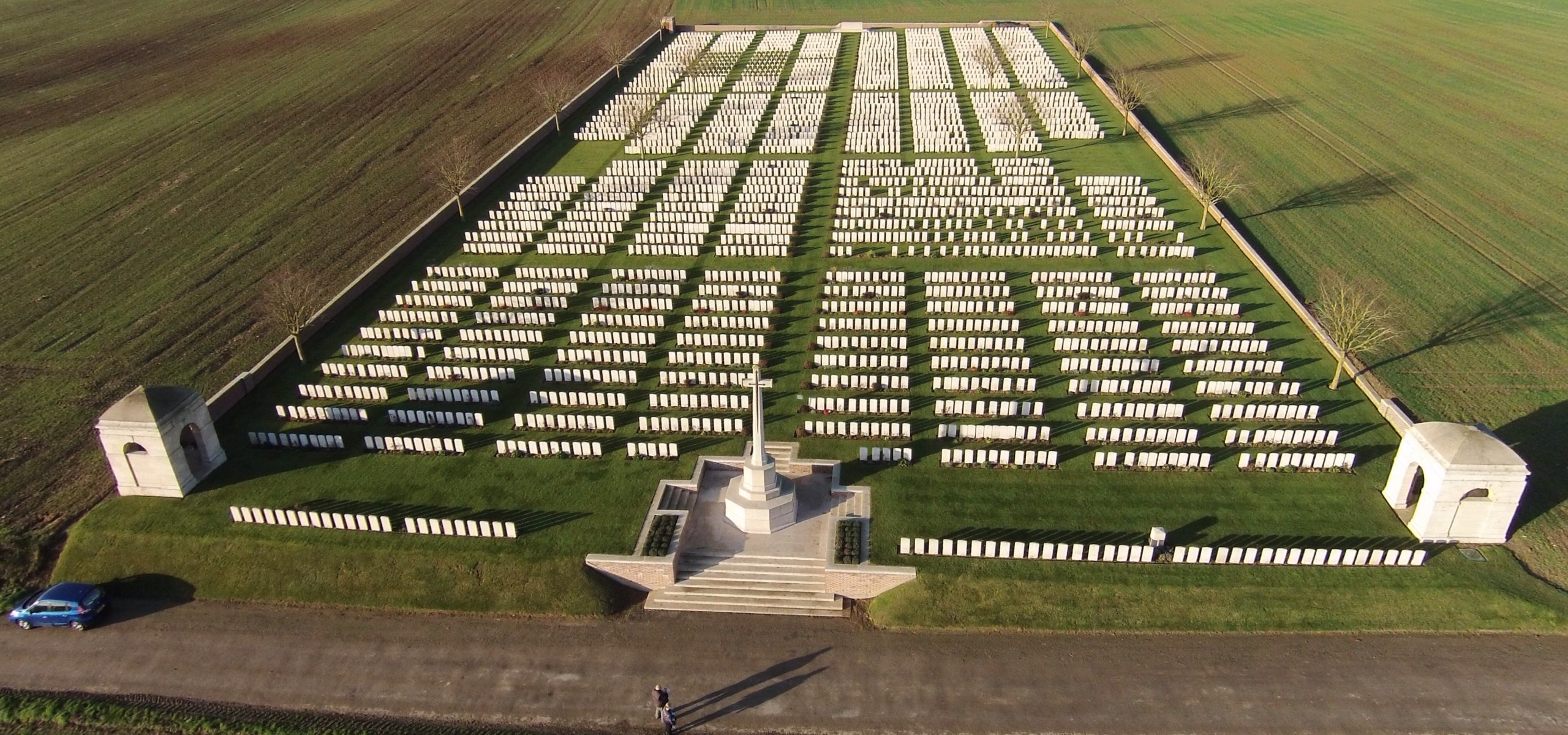
Details
Ovillers is a village about 5 kilometres north-east of the town of Albert off the D929 road to Bapaume. The Military Cemetery is approximately 500 metres west of the village on the D20 road to Aveluy. The Cemetery is signposted in the village.

Ovillers Military Cemetery

Ovillers Military Cemetery

Ovillers Military Cemetery

Ovillers Military Cemetery

Ovillers Military Cemetery at sunset
On 1 July 1916, the first day of the Battle of the Somme, the 8th Division attacked Ovillers and the 34th Division La Boisselle. The villages were not captured, but the ground was won between them and to the south of La Boisselle. On 4 July, the 19th (Western) Division cleared La Boisselle and on 7 July the 12th (Eastern) and 25th Divisions gained part of Ovillers, the village being cleared by the 48th (South Midland) Division on 17 July. The two villages were lost during the German advance in March 1918, but they were retaken on the following 24 August by the 38th (Welsh) Division. Ovillers Military Cemetery was begun before the capture of Ovillers, as a battle cemetery behind a dressing station. It was used until March 1917, by which time it contained 143 graves, about half the present Plot I. The cemetery was increased after the Armistice when Commonwealth and French graves were brought in, mainly from the battlefields of Pozieres, Ovillers, La Boisselle and Contalmaison.

Ovillers: Colonel F.C.Heneker, Tyneside Irish

Ovillers: Pte George Nugent

Ovillers: Capt J.C. Lauder

Ovillers: Clem Cunnington

Ovillers: Capt E.S. Underhill
There are now 3,439 Commonwealth servicemen of the First World War buried or commemorated in the cemetery. 2,479 of the burials are unidentified but there are special memorials to 24 casualties believed to be buried among them. Other special memorials record the names of 35 casualties, buried in Mash Valley Cemetery, whose graves were destroyed in later fighting. The cemetery also contains 120 French war graves. The cemetery was designed by Sir Herbert Baker.
Number of burials by Unit
| Northumberland Fusiliers |
111
|
Royal Fusiliers (City of London Regt) |
83
|
|
| Royal Berkshire Regt |
63
|
Suffolk Regt |
56
|
|
| Lincolnshire Regt |
36
|
Devonshire Regt |
32
|
|
| Middlesex Regt |
32
|
Queen’s (Royal West Surrey Regt.) |
31
|
|
| Royal Welch Fusiliers |
29
|
Canadian Units |
27
|
|
| Essex Regt |
26
|
Royal Field Artillery |
21
|
|
| Royal West Kent Regt (Queens Own) |
21
|
Sherwood Foresters (Notts & Derbys Regt.) |
21
|
|
| Royal Sussex Regt |
20
|
Worcestershire Regt |
18
|
|
| Australian Units |
17
|
Buffs (East Kent Regt) |
17
|
|
| Cheshire Regt |
16
|
Royal Warwickshire Regt |
16
|
|
| Gloucestershire Regt |
13
|
Border Regt |
12
|
|
| Gordon Highlanders |
12
|
Royal Irish Rifles |
12
|
|
| Argyll & Sutherland Highlanders |
11
|
Machine Gun Corps (Inf) |
11
|
|
| Seaforth Highlanders |
11
|
Lancashire Fusiliers |
10
|
|
| East Surrey Regt |
9
|
Loyal North Lancs Regt |
9
|
|
| South Staffordshire Regt |
9
|
King’s Royal Rifle Corps |
7
|
|
| Royal Engineers |
7
|
South African Units |
7
|
|
| South Lancashire Regt |
7
|
Yorkshire Regt |
7
|
|
| Black Watch (Royal Highlanders) |
6
|
Highland Light Inf |
6
|
|
| Manchester Regt |
6
|
Northamptonshire Regt |
6
|
|
| Royal Garrison Artillery |
6
|
West Yorkshire Regt |
6
|
|
| Durham Light Inf |
5
|
Royal Scots |
5
|
|
| York & Lancaster Regt |
5
|
Bedfordshire Regt |
4
|
|
| Cameron Highlanders |
4
|
East Lancashire Regt |
4
|
|
| King’s Own Yorkshire Light Inf |
4
|
North Staffordshire Regt |
4
|
|
| Rifle Brigade |
4
|
Wiltshire Regt |
4
|
|
| Ox and Bucks Light Inf |
3
|
Duke of Cornwall’s Light Inf |
2
|
|
| Duke of Wellington’s Regt |
2
|
Hampshire Regt |
2
|
|
| King’s Liverpool Regt |
2
|
17th Bn London Regt (Poplar & Stepney Rifles) |
2
|
|
| Royal Army Medical Corps |
2
|
Welch Regt |
2
|
|
| Cameronians (Sco Rifles) |
1
|
East Yorkshire Regt |
1
|
|
| Grenadier Guards |
1
|
King’s Own Royal Lancaster Regt |
1
|
|
| Leicestershire Yeomanry |
1
|
New Zealand |
1
|
|
| North Irish Horse |
1
|
Royal Army Service Corps |
1
|
|
| Royal Dublin Fusiliers |
1
|
Royal Inniskilling Fusiliers |
1
|
|
| Royal Munster Fusiliers |
1
|
Royal Naval Division |
1
|
|
| Welsh Guards |
1
|
1
|
||
| Identified UK & Commonwealth burials |
956
|
|||
| Unidentified UK burials: |
2,358
|
|||
| Unidentified Australian burials: |
40
|
|||
| Unidentified Canadian burials: |
68
|
|||
| Unidentified South African burials: |
6
|
|||
| Unidentified New Zealand burials: |
6
|
|||
| Total Unidentified burials |
2478
|
|||
| Total burials |
3434
|
 WW1 Revisited
Comments on WW1 Revisited