WW1 Revisited
A Great War Journey with Paul Reed


The area known as Le Linge was actually part of Germany in 1914. French troops entered the mountains not just to take the fight to the Germans but to regain soil that they believed was French. During the heavy fighting in these rock-cut trenches in early 1915 there was more than 17,000 fatal casualties; a staggering toll.
This part of the Western Front is very different to others and in some ways challenges our view of what the front was like and reminds us of the sacrifice that took place in all too often forget sectors like Le Linge.
This particular trench is German, dates from 1914 but was captured in 1915. It remains in the state it was left in 1919.
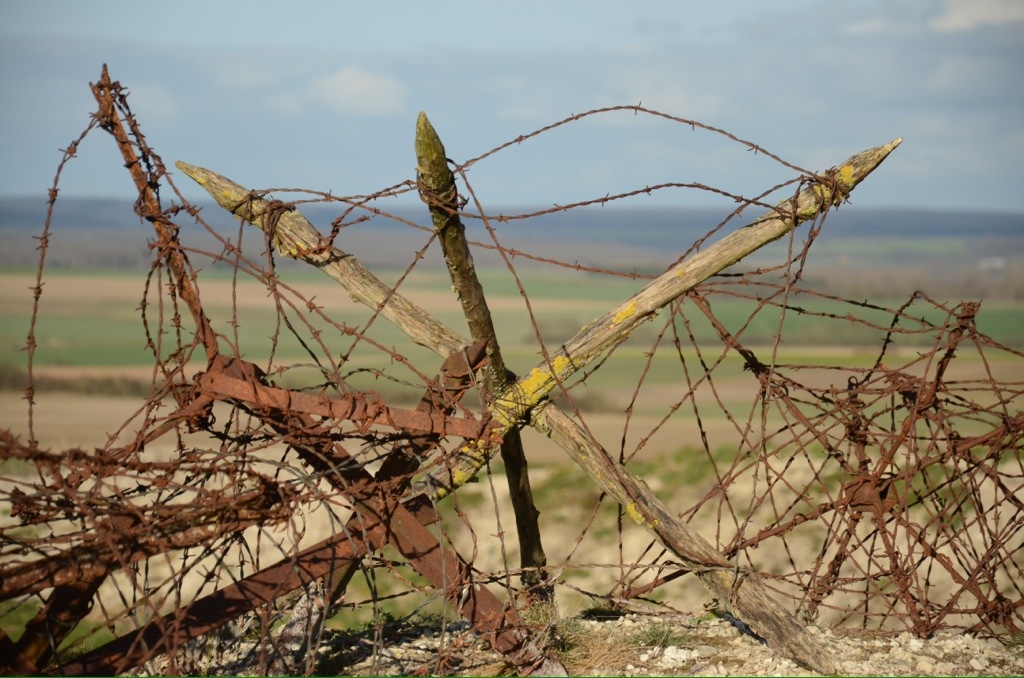
The trenches of the Western Front were protected by barbed wire – The Devil’s Rope – from early on in the war. This section of preserved barbed wire is in front of a French trench on the Champagne battlefields where heavy fighting took place in September 1915.
Taken on a Nikon D7000 at the end of a bright spring day.

This huge memorial, the largest free-standing statue in France, is set in 40 acres of ground. Designed by architect Thomas Hastings, the sculptor was Frederick MacMonnies. It was unveiled in September 1932, some 14 years after the First Battle of the Marne in September 1914. Paid for by the American Friends of France, it was in recognition of this important turning point in the First World War and the stopping of the Germany Army here in 1914.
The main inscription reads:
Here speak again the silent voices of heroic sons of France who dared all and gave all in the day of deadly peril turned back the flood of imminent disaster and thrilled the world by their supreme devotion.
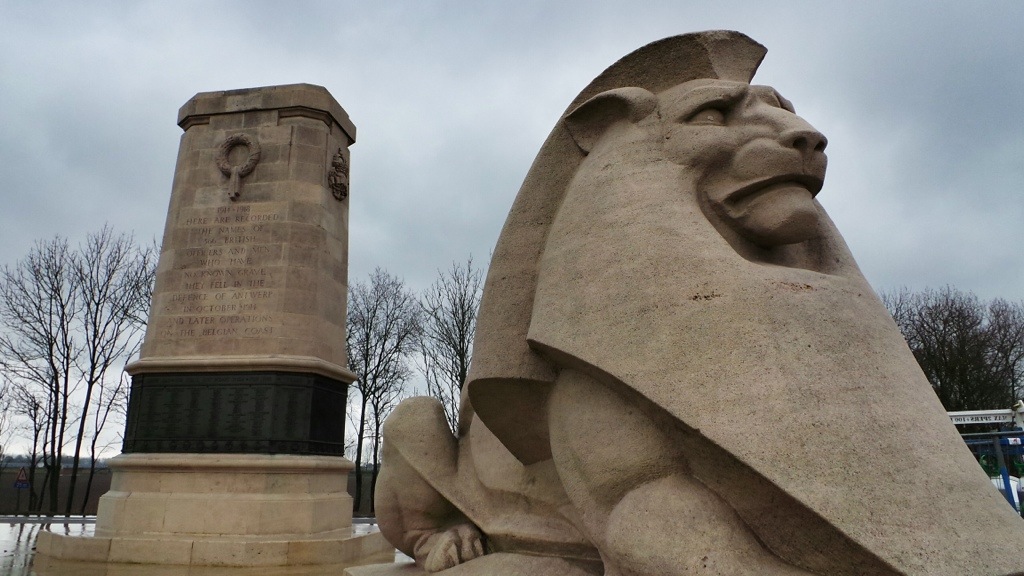
The Nieuport Memorial was unveiled in 1928 and commemorates more than 500 soldiers, and sailors of the Royal Naval Division, who died on the Northern End of the Western Front and in land operations in north Belgium close to Antwerp and have no known grave.
The memorial was designed by noted architect, and Great War veteran, Charles Sergeant Jagger; the lions in particular a notable feature of his work.
The memorial is the most northern British war memorial on the Western Front battlefields, in a sector close to the Yser Canal, which few associate with the British Army in WW1.

 WW1 Revisited is my third and final website for the First World War Centenary. My others have been WW1 Centenary.net and Great War Photos.
With WW1 Revisited you can follow the journey I intend to take over the next four years revisiting the battlefields of the First World War across Europe and beyond, photographing what remains of the Great War battlegrounds a century after the fighting.
I will be photographing these battlefields with everything from an iPhone to a Nikon DSLR, and also aim to use some WW1 period cameras that were actually taken into the trenches. In addition the site will include video as well as images, and I hope to have some guest content as part of it, too.
There are already some photos on the site for you to browse, with more coming soon, and as part of this website launch I am about to head off on a journey along the entire Western Front, going from the beaches at Nieuport to the far end on the Swiss border at Pfetterhouse: I will be adding images from this trip to the site as I travel.
The First World War Centenary is a fascinating period to remember and reflect, as well as learn, so join me on this journey to Revisit WW1.
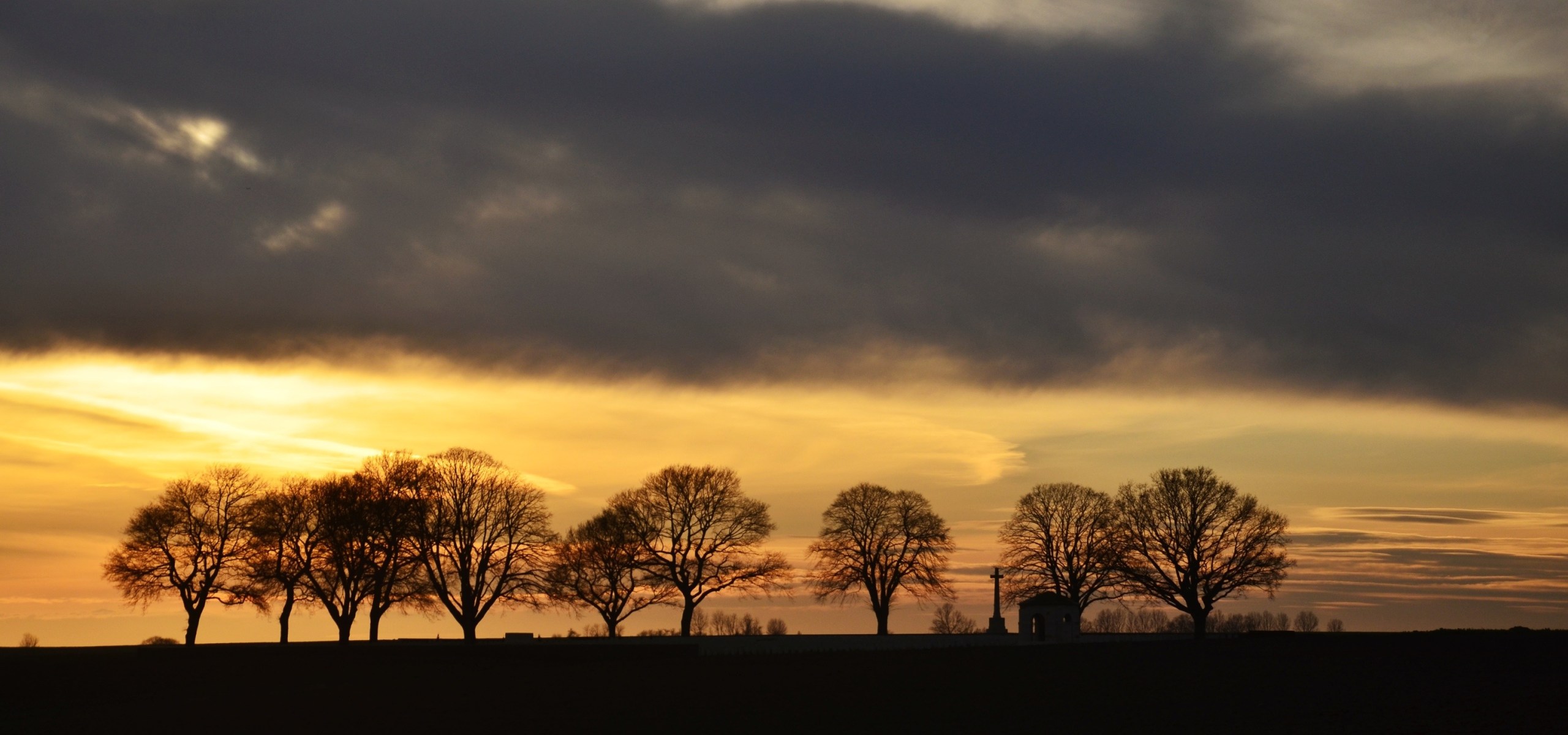
A February sunset over the Somme battlefields looking towards Courcelette British Cemetery where Canadian soldiers fought in September 1916.
Taken on a Nikon D7000.
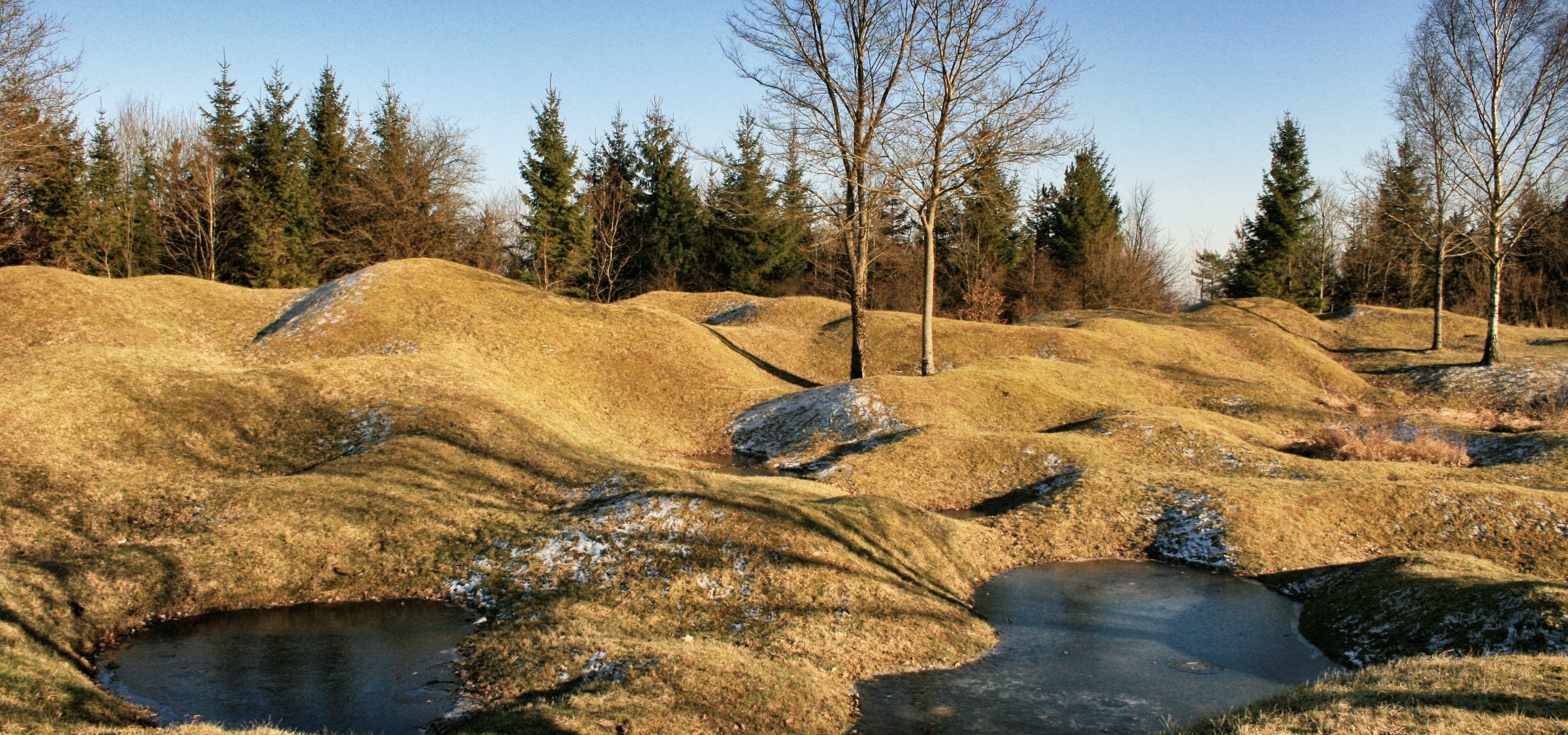
The battlefield of Verdun was one of the great killing grounds of the First World War. Here France stood firm against a German attack, which cost both sides 770,000 casualties in 1916. It was said that more than 1,000 shells fell for every square metre of the Verdun battlefield, turning it into a vast crater-zone, a moonscape of shell holes, still visible a century later.
This image was taken at dusk inMarch 2010 at Froideterre on the Verdun battlefield with a Canon EOS 400D.

The village war memorial in Thiaucourt-Regniéville bears a striking bronze showing a soldier of the American Expeditionary Force (AEF) shaking hands with a French soldier, a Poilu. This recalls the occasion during the fighting for the St Mihiel Salient in 1918 when Americans and Frenchmen fought side by side.
The War Memorial shows sign of battle damage from the fighting in this area in 1940 and 1944.

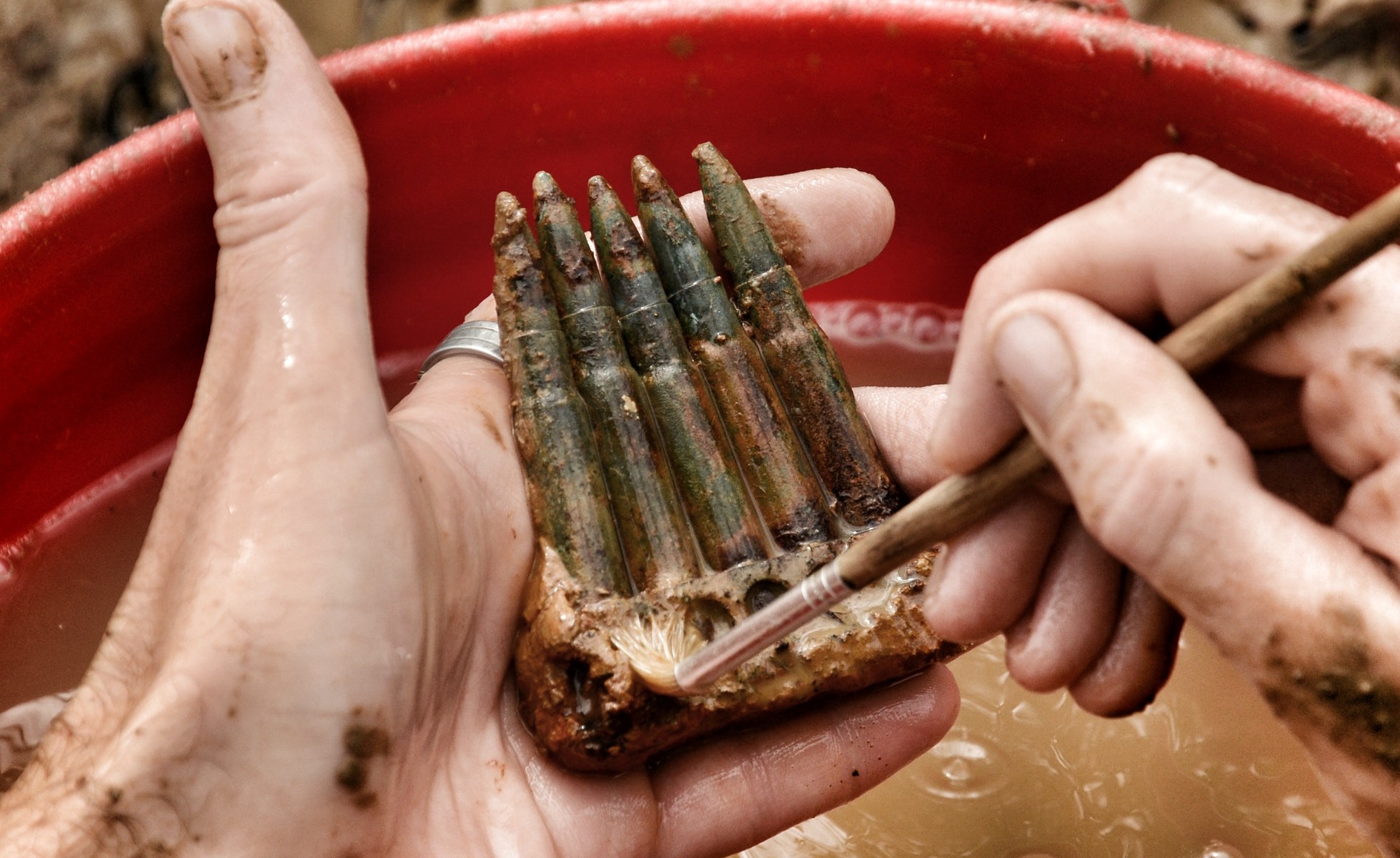
A Belgian archaeologists carefully cleans a clip of British .303-inch bullets from the First World War. These were found during a dig at the Belgian town of Messines, in Flanders, in 2012 which featured in Channel 5’s WW1 Tunnels of Death.
Items like this are found every year and are still potentially dangerous; they should always be left well alone.

This German trench, dating from 1916, was unearthed during a major excavation by ADeDe archaeologists lead by Simon Verdeghem in 2012. The dig featured in Channel 5’s WW1 Tunnels of Death.
The trench links into a large German dugout dating from the same period. The small recesses on the right were for hand grenades; one was still full of German Stick Grenades when uncovered. This is the deepest evert intact trench excavated on a WW1 battlefield.
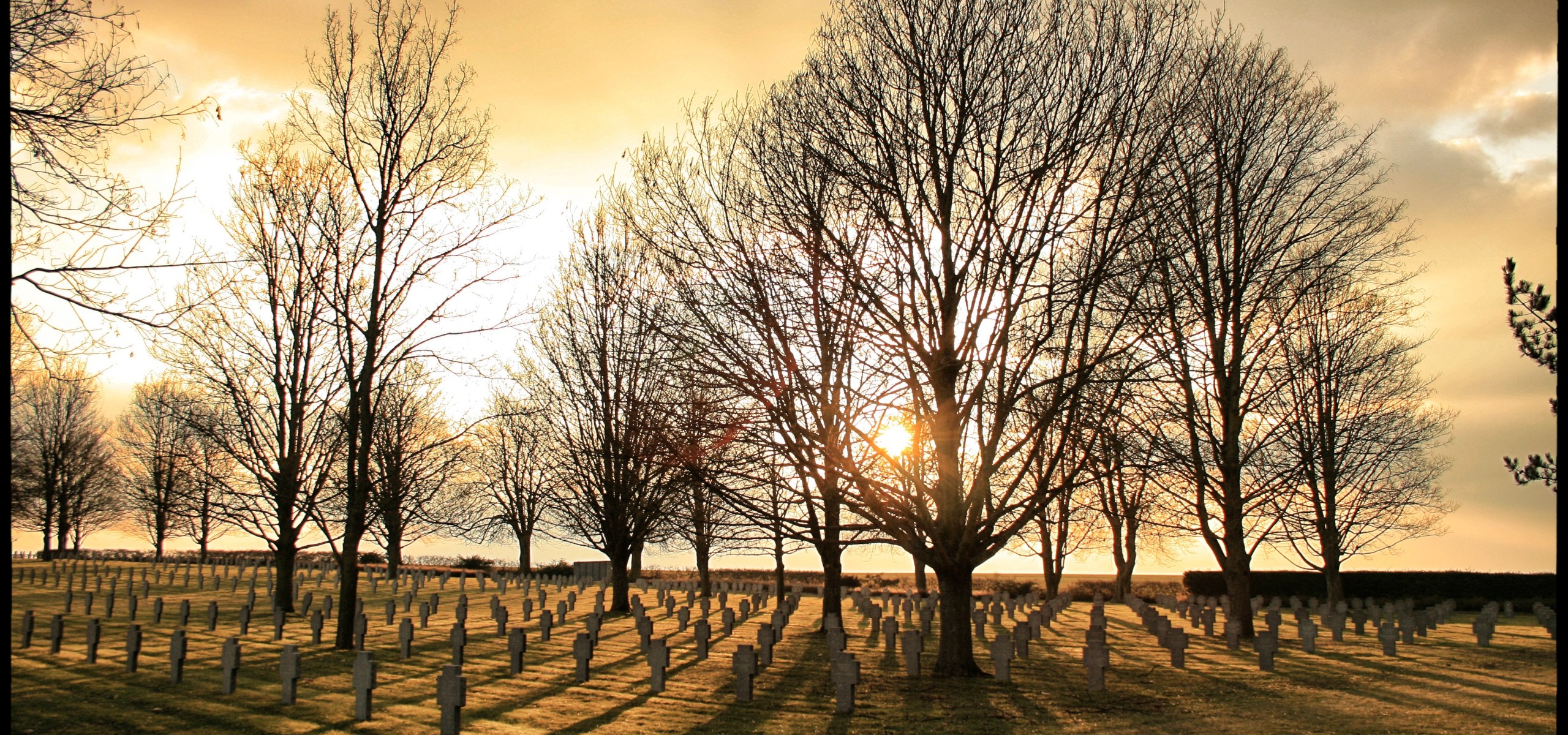
Located south of Soissons in the Aisne, this German cemetery has 9,229 indivudal burials of which thirteen are unknown. There are large ‘mass graves’ in the cemetery, containing a further 5,557 burials, of which 4,779 are unknown.
Taken on a Canon EOS 400D at sunset in March 2010.
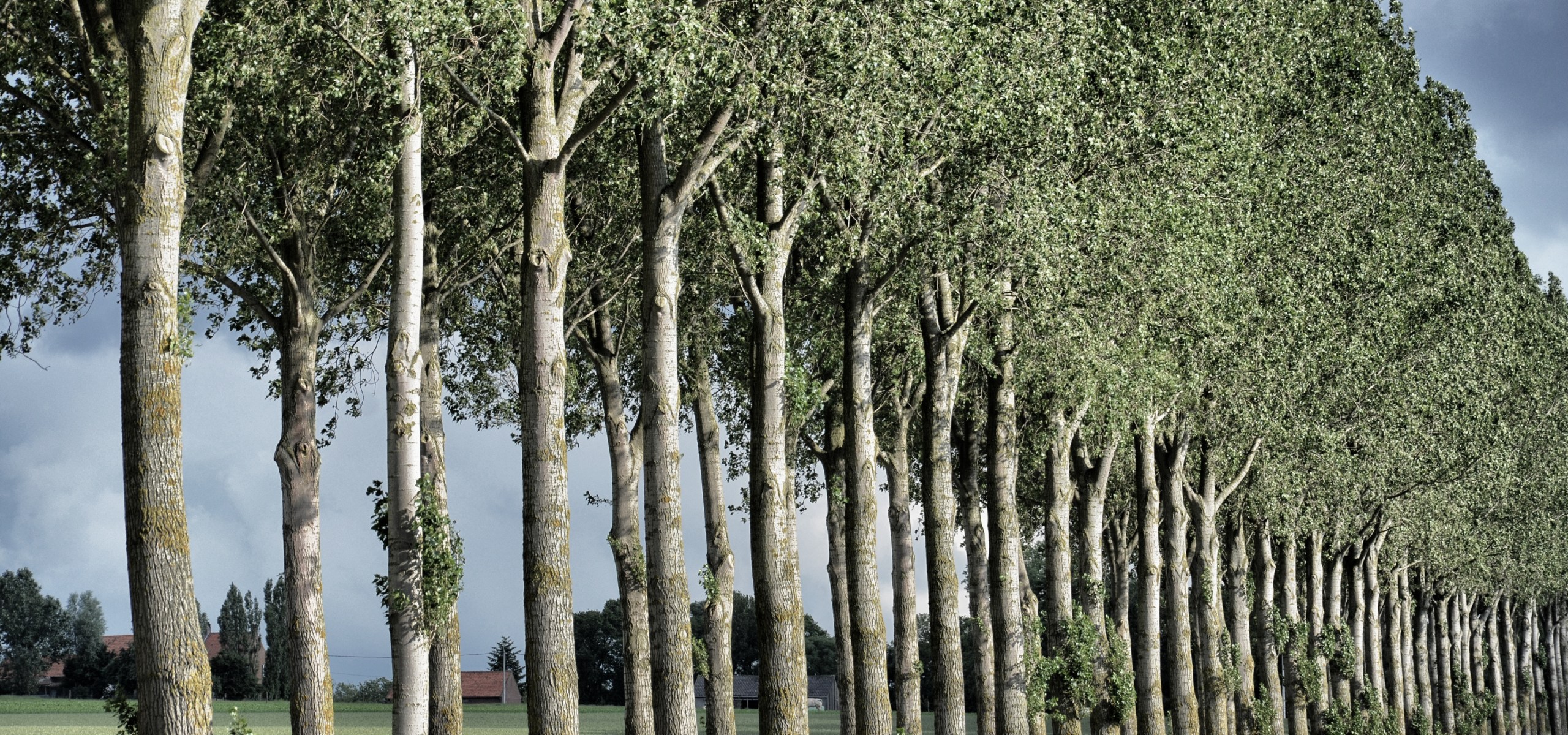
This tree-lined avenue runs from the high ground behind the old British positions which overlooked Messines Ridge in Flanders. It was tree-lined in 1914 and remains one of the few places that looks almost identical to what it was like a century ago. Photographed on a summer’s evening in 2013 with a Nikon D7000.
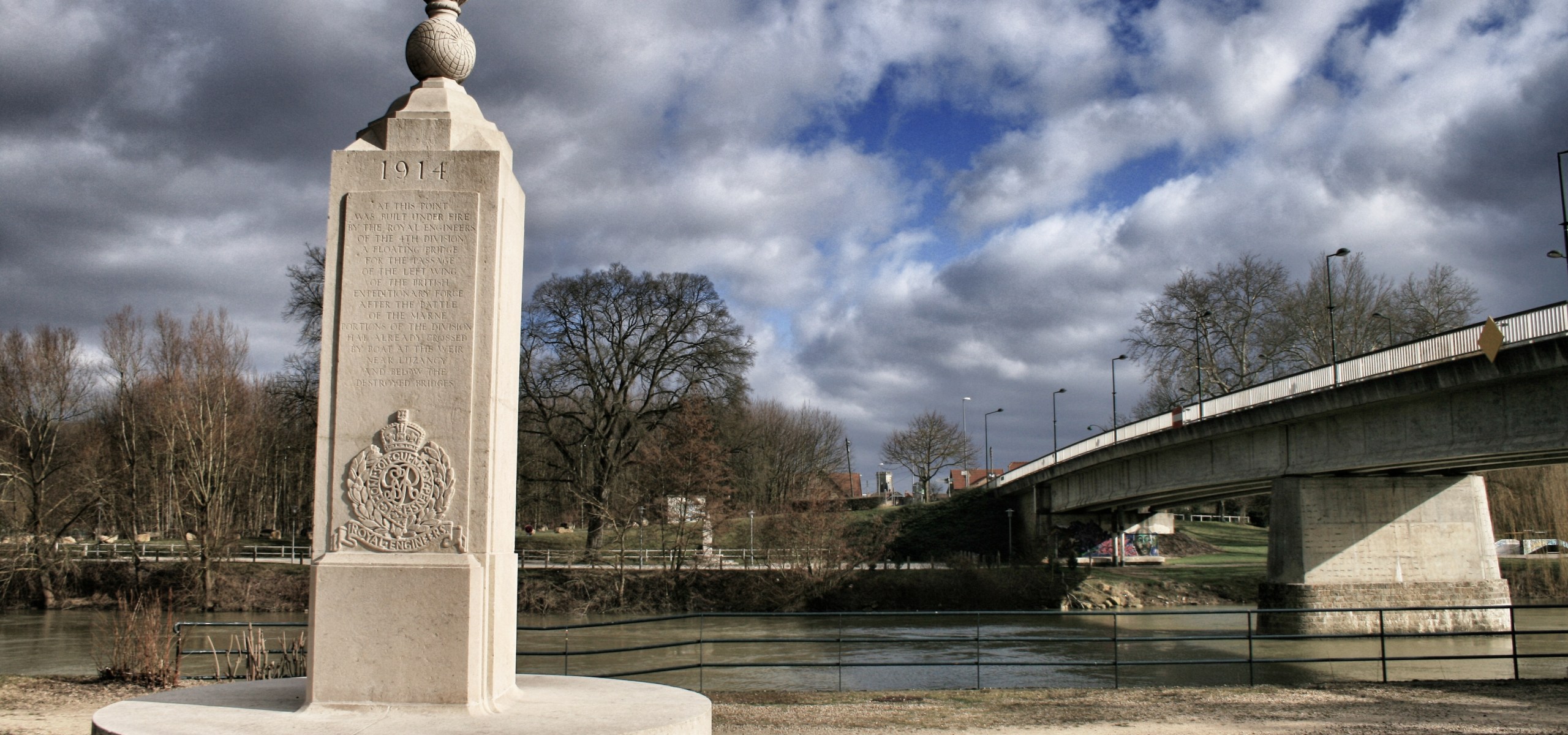
Located in the village of La Ferte sous Jouarre, the memorial stands on the site where the Royal Engineers of the British Expeditionary Force (BEF) built floating pontoon bridges across the Marne river during the pivotal Battle of the Marne in September 1914. This enabled troops to cross and tipped the balance in the favour of the Allies as the German Schlieffen Plan pushed on Paris.

In the four years of the Great War in Flanders the British Army established camps all around Ypres, many of them containing permanent structures like these two shelter bunkers located on the former site of ‘ANZAC Camp’ south-west of the city of Ypres. The camp had been used by Australian and New Zealand troops during the Battle of Passchendaele, but the bunkers may date from early 1918.

A late October sunset looking north towards Courcelette British Cemetery on a battlefield fought over in September 1916. Taken with a Nikon D7000 in 2012.
 WW1 Revisited
Comments on WW1 Revisited